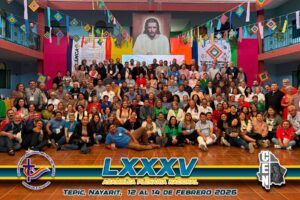
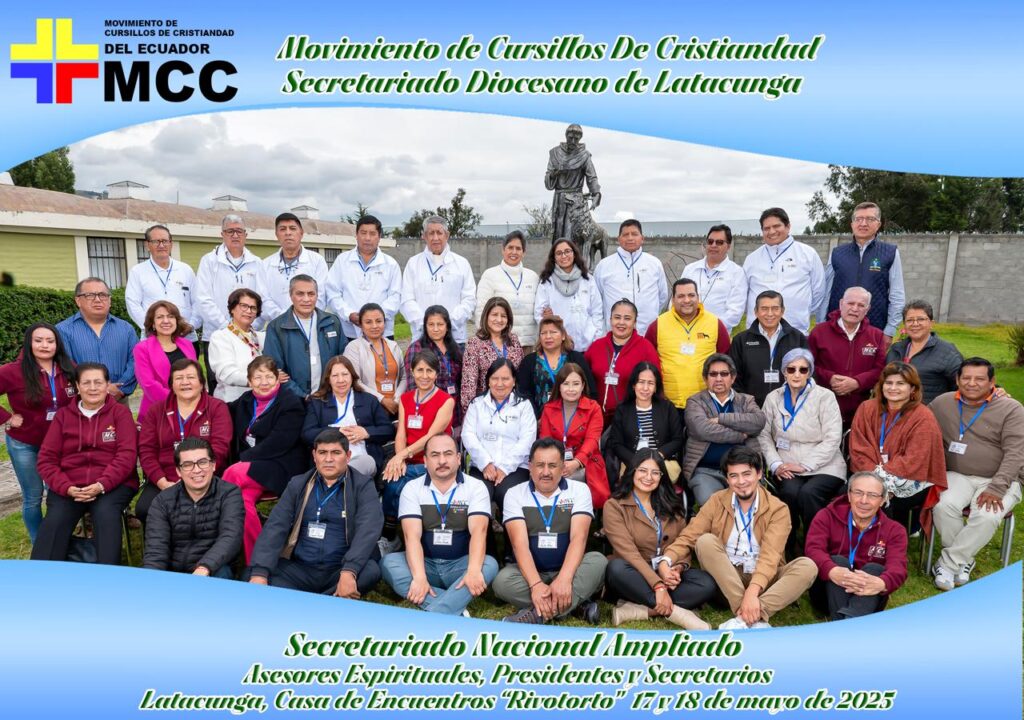
 The history of the Cursillos in Christianity Movement in Ecuador is a story of generous sowing, of friendship lived in the spirit of the Gospel, and of hearts that, upon encountering Christ, began to transform their surroundings.
It all began in 1961, in Guayaquil, when two Spanish priests—Juan Fernández and Manuel Sánchez—brought to Ecuador the experience that was already bearing fruit in other countries. They did so with the welcome and approval of Bishop César Antonio Mosquera and his vicar general, Monsignor Rogelio Beauguer, who quickly understood the evangelizing value of the Cursillo method.
The terrain chosen to begin was youth. Where the heart is open to the future, the proclamation of the Gospel finds fertile ground. The first steps were taken with young people, especially with students in their final years at La Providencia School and later with students at San José School of the Christian Brothers.
Those young people not only received the message; they soon became protagonists themselves. They formed a dynamic team that met at the Colegio Santo Domingo de Guzmán, where the first Cursillo de Cristiandad held in the country was prepared.
That first Cursillo, held in July 1961 at the Ballenita resort, marked the beginning of a story that would continue to grow. It was led by José Icaza Coronel, accompanied spiritually by Fr. Manuel Sánchez and Monsignor Rogelio Beauguer. Among the participants were Ramiro Larrea and Gonzalo Albán, along with other leaders who enthusiastically began to share the fundamentals of Christianity.
As in many places where the Movement began, the first Cursillos brought together people with influence in social, political, and economic life. But what was truly important was not the social status of the participants, but the experience they were living: discovering that Christ loved them personally and that their lives could become a living witness to the Gospel.
And so it began to happen.
Many Cursillistas, enlightened by this experience of grace, began to act as leaven in their environments: in public life, in the professional world, in society, and in the family. As the charism of the Movement has always sought, the Gospel began to reach the places where decisions are made and where the daily life of society is built.
The Cursillo sets out on its journey
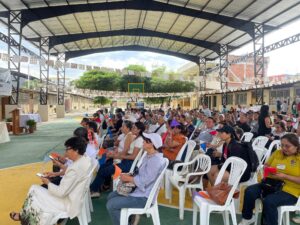 From Guayaquil, the Movement began to spread throughout the country.
It arrived in Quito in 1965, promoted by Gerino Cassal Pereira, a leader deeply committed to the Movement and sent from Rome to collaborate in the formation of the Schools for Leaders in Ecuador. With the support of Guillermo Franco, Rodolfo Rodríguez, and Eduardo Peña Triviño, the first Cursillo for men was held from February 28 to March 2, 1965, and a few months later, the first Cursillo for women.
In those years, the Movement relied on a very significant training manual: “Vertebración de Ideas” (Structuring Ideas), which helped to understand the structure and spirit of the Cursillo, and which would be the precursor to the Movement’s current reference text: Fundamental Ideas of the Cursillos of Christianity.
The seed continued to grow.
In Cuenca, the Cursillos began in 1973, after a period of preparation and formation.
In Manabí, they arrived in 1976, with the first Cursillo held in Rocafuerte.
That same year, they also began in Tulcán, with the strong support of Bishop Luis Clemente de la Vega and the collaboration of leaders from Quito.
From there, the Movement gradually spread:
Ibarra, Machala, Cañar, Tungurahua, Latacunga, Loja, and other cities received the Cursillo experience thanks to the dedication of priests and lay people who understood that evangelization is done by walking, sharing the faith, and building friendships.
Each new Cursillo was a small community being born. Each new School of Leaders became a space where the charism was nurtured, the mentality of the Movement was deepened, and new evangelizers were prepared for their environments.
A grace that continues to bear fruit
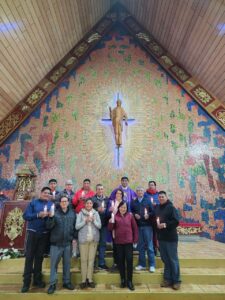 Over the years, the Cursillos in Christianity Movement has left a deep mark on Ecuador. Not only on the people who have lived the Cursillo, but also on their families, their communities, and society.
As has been said so many times in the Movement, Cursillo does not end on Sunday afternoon. It continues in life, in friendship, in community, and in mission.
Therefore, the history of Cursillos in Ecuador is not just a chronology of dates and places. It is, above all, the story of thousands of people who discovered the fundamentals of Christianity and decided to live them with joy.
St. John Paul II once said that Cursillos de Cristiandad are “an instrument raised up by God for the proclamation of the Gospel to the people of our time.”
In Ecuador, that statement has come to life.
Because when a heart encounters Christ and discovers that it is not alone, something changes.
And when many hearts live that experience together, the world begins to fill with color.
De Colores.