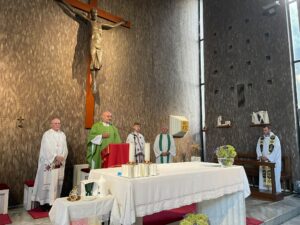
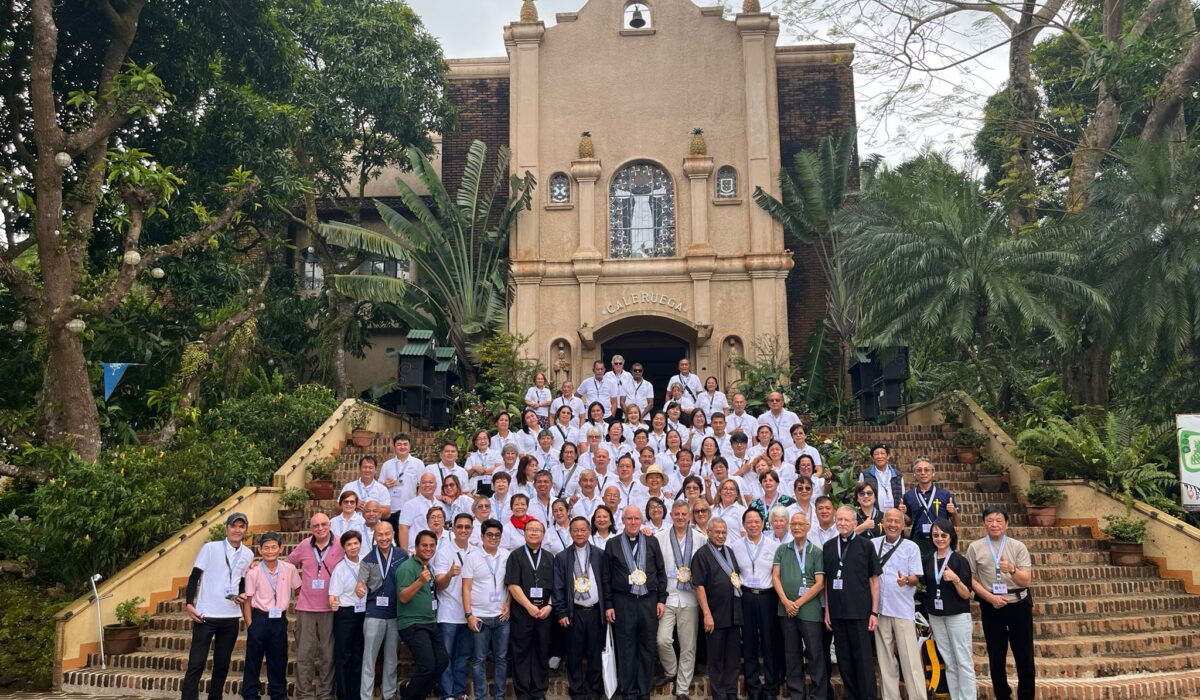
From November 10 to 14, 2025, the Caleruega Retreat Center in Nasugbu, Batangas (Philippines), joyfully and hopefully hosted the 23rd Meeting of the Asia-Pacific Group (APG) of the Cursillos in Christianity Movement. Cursillistas from various countries shared experiences, strengthened communion, and renewed their commitment to evangelization.
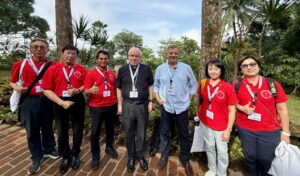 This Meeting comes at a crucial moment for the Church in Asia-Pacific, where the laity is growing in prominence and pastoral responsibility, facing contexts of cultural plurality, social challenges, and the need for close, authentic, and transformative evangelization. In many communities, Cursillistas are now active agents of Christian renewal, bringing the faith to environments where the Church needs a committed lay presence and living witness.
The meeting was much more than an international gathering: it was a space where friendship and the Spirit that unites us were celebrated, reminding us that the mission of the MCC transcends borders and cultures. As José Ángel Saiz, spiritual advisor to the OMCC, pointed out:
“The Cursillo Movement is a valid and effective instrument for Christian renewal because it allows each person to encounter themselves, Christ, and others, experiencing God’s unconditional love and sharing it.”
The speakers emphasized that the MCC is not just a weekend event, but an integral process of evangelization. The Precursillo, Cursillo, and Postcursillo method allows for a triple encounter: with Christ, with oneself, and with others, ensuring that the Christian experience is maintained and spread in the environments. José Ángel emphasized that this path:
“is not limited to the formation of young people or lay people, but transforms the realities in which we live, promoting Christian nuclei that ferment their environments with the Good News of the Gospel.”
For his part, Álvaro presented synodality as key to the mission of the MCC, an invitation to walk together, value diversity, and live co-responsibility.
“Synodality means walking in unity within diversity, integrating differences, accepting conflicts, and trusting in the Spirit to move forward in communion and mission.”
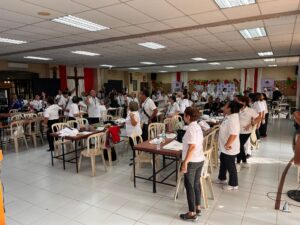 During the meeting, the participants experienced how this vision strengthens the ecclesiality of the Movement, allowing each member to contribute from their identity to the common good. The community and relational dimension of evangelization was highlighted: synodality is not merely an organizational concept, but a way of life that makes the Church visible as the People of God in action, where each person contributes and allows themselves to be transformed.
Between moments of prayer, formation, and fellowship, the importance of Group Meetings and Ultreyas was emphasized. These instances not only strengthen faith, but are spaces where friendship, accompaniment, and ongoing evangelization are cultivated. As José Ángel recalled:
“Making friends to make them friends of Christ is the essence of our mission; friendship is the channel for witness and for the transformation of environments.”
The meeting also provided an opportunity to reflect on the missionary process of the MCC, emphasizing that evangelization is not improvisation, but a living method: from selection and preparation in the Precursillo, through the intense encounter of the Three Days, to the perseverance and fermentation of the Postcursillo. Álvaro insisted that:
“The MCC exists for others, not for itself; walking together is the condition for our charism to bear fruit and reach all corners.”
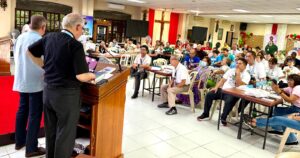 He also delved into how synodality applied to the MCC implies co-responsibility, humility, and discernment, connecting with the principles promoted by Pope Francis: unity over conflict, time over space, and the whole over the parts. This approach reinforces the mission of the laity and their active insertion in diocesan pastoral ministry, integrating the action of the MCC with the life of the local and universal Church.
At the close, the participants reaffirmed their commitment to bring the light of Christ to their communities, applying friendship, witness, and prayer as the cornerstones of evangelization. The 23rd Asia-Pacific Group Meeting recalled that the strength of the MCC lies in the Spirit and friendship, in communion and collaboration, and in the conviction that together we can bring our charism to fruition. As Álvaro says:
“Synodality invites us to overcome individualism and formalism, to open ourselves to others and to serve with humility and hope.”
Ultreya, Asia-Pacific! Because where there is friendship, faith, and Spirit, the Gospel continues to walk and transform lives.
Documents:
ON THE VALIDITY OF THE CURSILLO MOVEMENT FOR THE CHRISTIAN RENEWAL AND THE EVANGELIZATION