The story of how an experience in Ciudad Real ignited an evangelizing fire that spread through dioceses, communities, and circles throughout Mexico.
 The history of the Cursillos in Christianity Movement in Mexico is one of those stories in which it is clearly evident how God opens paths when He finds hearts that are open to Him. What began as the concern of a priest who had lived a transformative experience in Spain soon became an evangelizing fire that would spread throughout the entire country.
It all began in 1957, when Father Pedro Hernández Durán, pastor of the Church of Fátima in Mexico City, traveled to Spain. There he was invited by Father Vicente Lores, General Director of the Hermandad de Operarios, to participate in Cursillo No. 37 in Ciudad Real, held from August 3 to 7.
That experience profoundly marked his life. Father Hernández returned to Mexico convinced that the Lord also wanted to give his country this simple and profound way of proclaiming the Christian essentials. He brought with him all the material he could gather: outlines of the talks, rector’s guides, spiritual guidelines… everything that could help him begin in fidelity to the spirit he had come to know.
But he knew that the first step had to be ecclesial. As has been recalled so many times in the history of the Movement, Cursillos are born and grow in the Church and for the Church.
That is why he requested an audience with the Primate Archbishop of Mexico, Archbishop Miguel Darío Miranda. After hearing the project, the archbishop not only authorized it but personally blessed it and offered his support. With that pastoral confirmation, the Movement began to take shape on Mexican soil.
A beginning prepared with patience
Father Hernández understood that enthusiasm alone was not enough: preparation was needed. For nearly a year, he worked diligently to form the first team.
Since there were still no lay leaders with experience in Cursillos, he asked for help from the Marist Brothers, who would assist in organizing the first men’s Cursillo. For the first women’s Cursillo, he had the support of nuns from the Florida, Regina, and Pasteur schools.
Finally, from November 12 to 15, 1958, at the Marist Brothers’ Querétaro Institute, the First Men’s Cursillo of Christianity in Mexico was held.
The team reflected the richness of the Church working in unity:
-
Spiritual Director: Father Pedro Hernández Durán
-
Rector: Brother Basilio Rueda, who years later would become Superior General of the Marist Brothers
-
Leaders: Arturo Chávez, Alberto Godínez, Heraclio Jiménez, and Federico Pardo
As is often the case with new beginnings, there were difficulties and details that needed improvement. But the spiritual fruit was so evident that preparations immediately began for the First Women’s Cursillo, held in February 1959, with Father Vicente Lores as spiritual director.
Shortly thereafter, the elements that sustain the life of the Movement began to take shape:
in April 1959, the weekly Ultreyas began at the parish of Fátima, and on April 7 of that same year, the School of Leaders began its work.
The Cursillo method was beginning to unfold its full power: a personal encounter with Christ, friendship lived in community, and a commitment to evangelization in one’s surroundings.
A Surprising Growth
 What happened next is one of the most surprising chapters in the history of the Movement in America.
Cursillos began to spread with extraordinary speed throughout the country. And, curiously, in many places they emerged without some dioceses knowing that they were already taking place in others.
It was as if the Holy Spirit were sowing seeds at the same time in different corners of Mexico.
That same year, 1958, for example, Cursillos were launched in the Diocese of Saltillo, spearheaded by a team made up of leaders from Mission, Texas, and Cursillistas from the diocese itself.
That same year, they also began in León, thanks to the enthusiasm of Father Timoteo Ríos, who had experienced a Cursillo in Segovia, Spain. Together with a group of committed laypeople—among them Salvador González Aldana—they began organizing Cursillos that would soon bear abundant fruit.
In 1959, the Movement reached Morelia, Querétaro, San Luis Potosí, and Tampico, often thanks to collaboration between dioceses, which shared teams and experiences.
In 1960, the Cursillos were launched in Puebla, spearheaded by Father Ángel Rey, who had also become acquainted with the Movement in Spain. Unaware that it already existed in other dioceses, he formed a small group of women instructors whom he carefully trained in the objectives and methods of the Cursillo. With them, the First Women’s Cursillo was held from January 6 to 9, 1960, followed shortly thereafter by the men’s Cursillo.
That same year, Cursillos also began in Xalapa, San Andrés, and Torreón.
And in 1961 came the great moment of expansion: the Movement spread throughout the country.
A country marked by the charism of the Cursillo
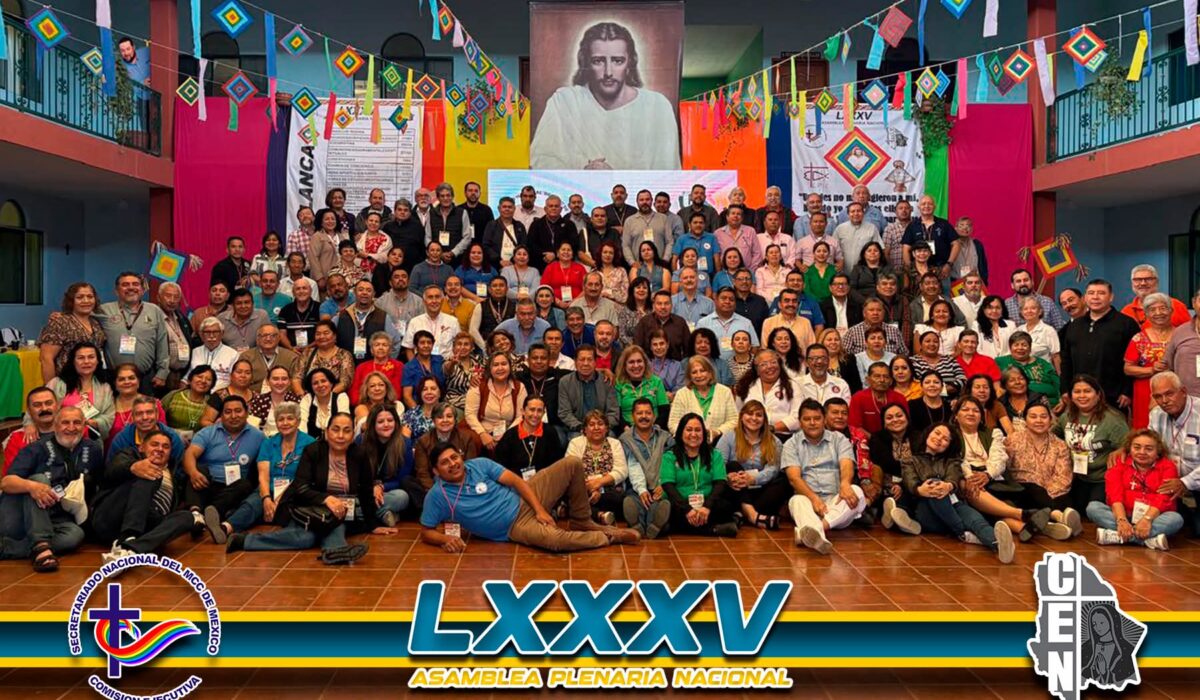
Mexico became one of the countries where the Cursillos in Christianity Movement grew most rapidly throughout the American continent. It was also the first country in the world to establish a National Secretariat, an important step toward coordinating and nurturing the charism throughout the country.
The support received from Spain played a decisive role in this development. On various occasions, such significant figures as Father Juan Capó, Father Fernando Juárez, Father Jaime David, Juan Caro, and Eduardo Bonnín, among others, traveled to accompany and guide the Movement’s growth.
But, as always happens in Cursillo, the true strength lay not only in the structures or the trips, but in something much simpler and deeper: evangelizing friendship.
People who had discovered that Christ was alive in their lives began to share this with others. And so, little by little, in parishes, communities, and various settings, the proclamation of the Gospel found new paths.
A path that remains open
 The history of Cursillos in Mexico is, at its core, the story of thousands of men and women who experienced three days that changed the way they looked at life.
They discovered that God loved them personally.
They discovered that faith is best lived in community.
And they discovered that every setting—family, work, society—can become a place of evangelization.
Thus, what began with a priest returning full of enthusiasm from a Cursillo in Spain ended up becoming a movement that would spread throughout an entire country.
Because when the Gospel is shared from person to person, from friend to friend, the Kingdom of God always finds new paths.
And in Mexico, as in so many places around the world, Cursillo continues to remind us of something very simple and deeply Christian:
Christ is counting on you.
And with you… he also wants to fill the world with colors.
De Colores.