 The situation of Christians in Vietnam today is a mixture of challenge and hope because, although the Catholic presence is long-standing and very lively, religious freedom continues to have limits that mark the daily life of the faith and mean that there is greater openness in the cities, while in rural areas or among ethnic minorities, controls and restrictions remain that condition Christian witness. However, the energy of the Vietnamese Church is surprising, with parishes full of committed young people an abundance of vocations, and a sincere desire to live the faith with joy. This makes the whole environment, which is not always easy but full of life, a particularly fertile ground where the Cursillo Movement can ignite profound and lasting processes.
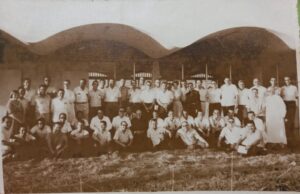
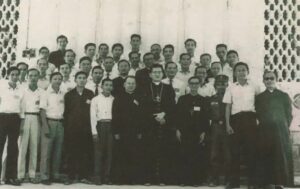 The history of the MCC in Vietnam is a story of courageous sowing, painful dispersion, and hopeful rebirth. It all began in 1965 when a group of Filipino Cursillistas who were military personnel stationed in South Vietnam brought the living experience of the Cursillo there. The first weekends were held in English for government officials and military personnel in Saigon, and soon the first fruits began to appear in the enthusiasm, commitment, and desire that this fresh movement would become part of the local culture.
 Among the protagonists of this first stage, the figure of the then young bishop Francis Xavier Nguyen Van Thuân stood out in a special way. He had previously attended a Cursillo in the Philippines and was deeply marked by its spirituality, its method, and its call to personal conversion. His presence at the first Cursillos held in Vietnam and his decisive support for the creation of the Cursillo Movement in the country helped to give solidity and depth to this initial sowing, which found a clear sign clear sign of growth in 1967 with the celebration of the first Cursillo in the Vietnamese language, which was surprisingly well received and began to take root in the local community.
History took an abrupt turn in 1975 with the fall of Saigon and the arrival of the communist regime, which severely restricted religious freedom and forced many Cursillistas to flee the country, including lay people and priests who had been protagonists of that first sowing. However, what seemed like the end turned into an unexpected expansion because the Vietnamese diaspora, established mainly in the United States, Australia, Canada, and France, took the experience they had lived in the Cursillos with them and transmitted it to their new communities, giving rise to a Vietnamese MCC in exile that kept alive the identity, joy, and evangelizing zeal of the movement even far from their homeland. It was officially recognized within the Asia-Pacific Group in 1992, consolidating its international mission and becoming a constant support for the MCC in Vietnam.
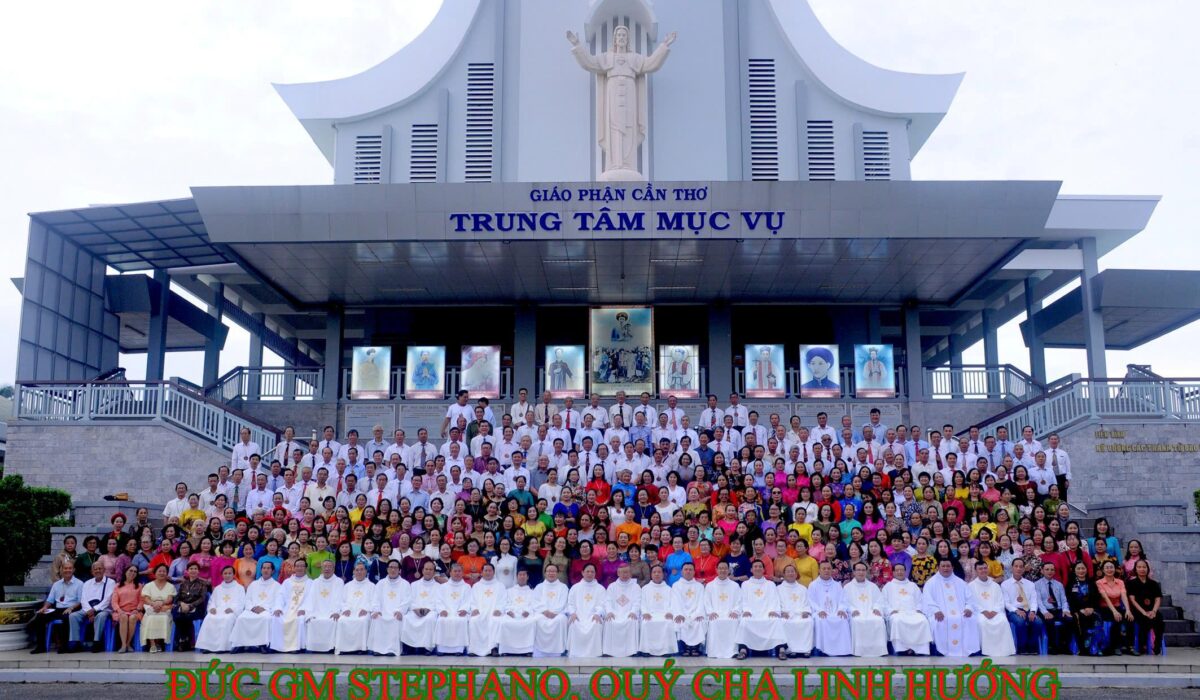
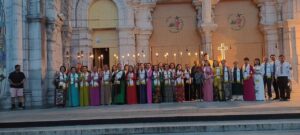 Meanwhile, within the country, the seed remained silent but alive, and from 2006 onwards, new groups of lay people began to emerge who wanted to rediscover the original spirit of the MCC, reviving Christian friendship, group meetings, and ultreyas. This rebirth was made possible in large part thanks to the generous and persevering accompaniment of MCC members in the diaspora, especially in the United States and Australia, who never stopped stopped supporting their brothers and sisters in Vietnam and who acted as a bridge between that first sowing and the current growth. Finally, in 2017, MCC Vietnam on the continent was officially recognized within the Asia-Pacific Group, confirming that the seed planted decades ago had never stopped breathing and that the life of the movement in the country was being reborn with strength, albeit in a discreet manner.
To speak of the MCC in Vietnam is to speak of fidelity in the face of difficulty, creativity in exile, and courage in reconstruction. It is a story that shows that authentic faith discovers paths even where there seem to be none and that Christian friendship can unite a people scattered over thousands of kilometers. The Vietnamese Cursillo community inside and outside the country bears witness to the same truth: that Christ continues to call us to transform our environments, even when they are complex and that the joy of the Gospel knows no boundaries. The testimony of Cardinal Francis Xavier Nguyen Van Thuân, declared Venerable by Pope Francis in 2017, remains a spiritual beacon for all of them because his life embodies what the movement desires to inspire: Christians who are free, joyful, steadfast, and capable of giving hope in any circumstance.
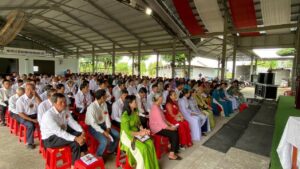 Today, as Vietnam moves forward amid contrasts and changes, the MCC becomes a privileged opportunity to renew the lives of the laity, to ignite daily faith, and to accompany those who seek a deeper meaning. It is a bridge between generations, between Vietnam and its diaspora, between the pain of the past and the hope of the future. It is an invitation to live colorfully even when everything around us seems gray. The MCC in Vietnam is not just another chapter in the history of the movement, but a living testimony that when God sows the seed, history never ends badly. Yesterday it was a seed, then it was a diaspora, today it is once again a young, fresh, and determined sprout, and tomorrow, with God’s grace and with those who continue to say yes, it will be a large tree that provides shade, joy, and the Gospel to many.
De Colores Vietnam, may your history continue to illuminate the world.
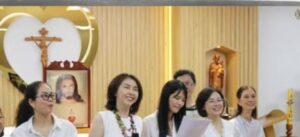
In the Diaspora (the U.S., Australia, Canada, France…) and in mainland Vietnam, the MCC flourished, keeping its identity and mission alive. MCC Vietnam in the Diaspora and in the mainland received official recognition within the Asia-Pacific Group in 1992 and 2017, respectively.