What the Spirit has done among us at the National Meeting of Cursillos in Christianity Leaders in Spain (2026)
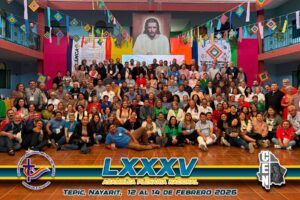
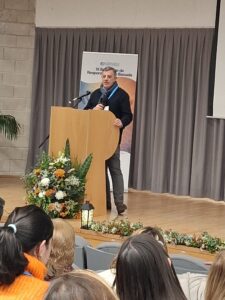 There are encounters that are remembered and there are encounters that leave a mark. The National Meeting of Leaders of Cursillos de Cristiandad in Spain (2026) undoubtedly belongs to the latter.
The first thing that comes to mind—before any analysis, before any well-thought-out words—is a serene and grateful certainty: the Spirit has passed through us. He has passed through us discreetly and powerfully. He has passed through us in shared prayer, in sincere listening, in the simple joy of knowing that we are brothers and sisters. And so, the first thing we can do is give thanks to God, because nothing we have experienced can be explained without Him. And we also give thanks to those who, with quiet and generous work, have prepared the Meeting so that the Spirit would find an open house and willing hearts.
The motto that brought us together—”See how they love one another”—ceased to be a nice slogan and became an experience. We did not read it: we saw it. We did not explain it: we lived it. Everything conveyed throughout the Encounter—the words shared, the respectful silences, the simple gestures, the times of prayer, and the conversations in the Spirit—led us to a deeply evangelical place: the place of listening, of communal discernment, and of real communion. There was no rush or strategy, but rather brothers and sisters seeking each other, leaders allowing themselves to be touched, hearts open to what God wanted to say to the Movement today. From this sprang a pure joy, a renewed friendship, an atmosphere of encounter that cannot be manufactured: it is received.
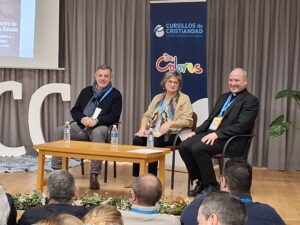 In that atmosphere, the Encounter reminded us of something essential that we sometimes risk forgetting: being responsible is not about doing things, it is about living in a certain way. We are leaders to the extent that we live and care for the community. Our meetings, our Schools, are not functional spaces; they are places of Christian life, of shared faith, of community discernment. What we experienced brought us back to our true responsibility: to be witnesses rather than managers, servants rather than organizers, brothers rather than officials. The authority that comes from love lived in community is the only one that bears fruit.
But the Spirit did not bring us together to look at ourselves. He brought us together to send us forth. The Encounter was also a clear and demanding call to continue looking at the mission today. We are—and want to continue to be—apostles of the first proclamation. Not because we have a message of our own, but because we have been touched by an experience that deserves to be shared. In a world tired of speeches, the Movement is called to offer life, encounter, and hope. The first proclamation is not a technique or a pastoral strategy: it is a life touched by God that becomes, almost without realizing it, proclamation.
And then comes the inevitable question, the one we cannot avoid: what now?
Now it is time to return. To return to concrete reality, to our daily tasks, to our schools. But not to return the same. The commitment is clear and personal: to bring everything we have experienced to our schools and to our lives. To let the Spirit continue to act in our decisions, in our relationships, in our way of serving. If what we have experienced in this Encounter does not translate into a new way of living responsibility, it will remain a memory. If, on the other hand, it becomes a criterion and an impulse, it will bear abundant fruit.
We do not return with recipes. We return with an experience. We do not return full of answers. We return with enlarged hearts. Because the Spirit has passed through. And when the Spirit passes through, nothing remains exactly the same.
De Colores