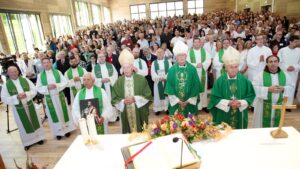
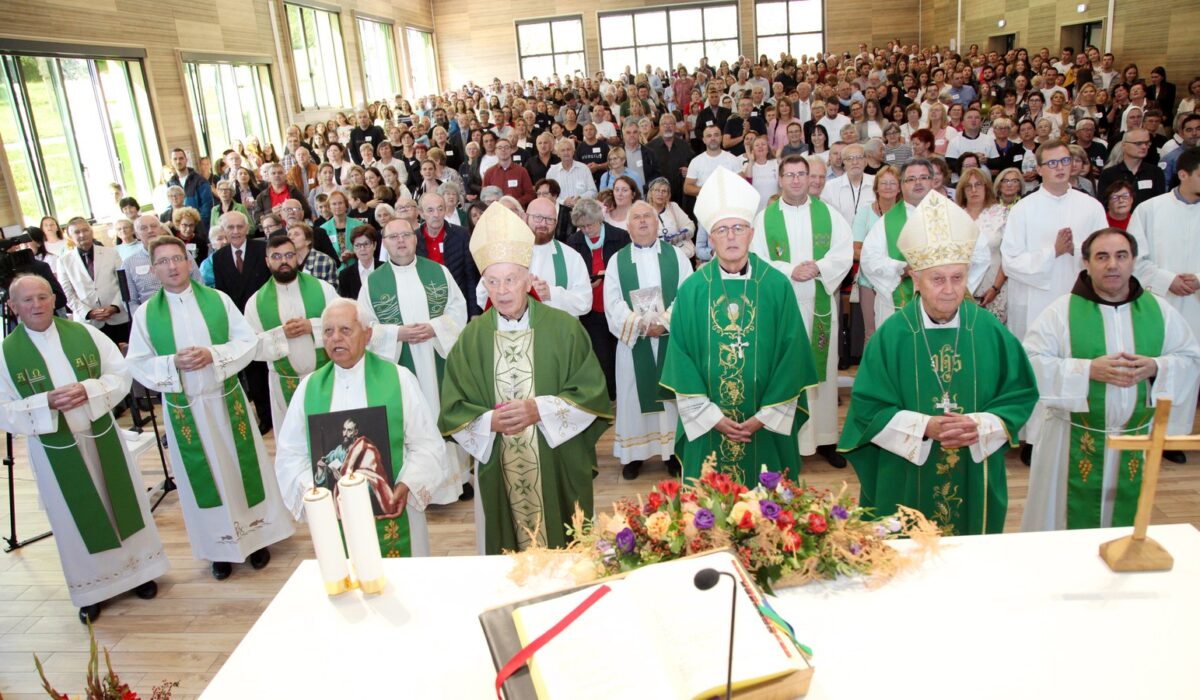
Celebration of the 50th anniversary of Cursillo in Croatia, Tabor, Samobor, 29 September 2024. Photo: OMCC / Cursillo Croatia.
Cursillos in Christianity reached Croatia through an encounter that connected Vienna and Zagreb. Since the first Cursillo held in Samobor in 1974, the Croatian movement has lived through political and social change, expanded across the dioceses and developed an extensive ministry with parishes, young people, married couples, families and veterans. In 2024, it marked fifty years of presence with more than one thousand people gathered at the place where its history began.
The encounter that prepared the way
In 1967, seminarian Andrija Vrane was sent to Vienna to continue his studies and receive treatment for his stutter. There he took part in a Cursillo. The experience of faith lived with simplicity, joy and a personal closeness to Christ deeply marked his vocation. Vrane also found a community in which priests and lay people shared their faith naturally and built relationships of friendship.
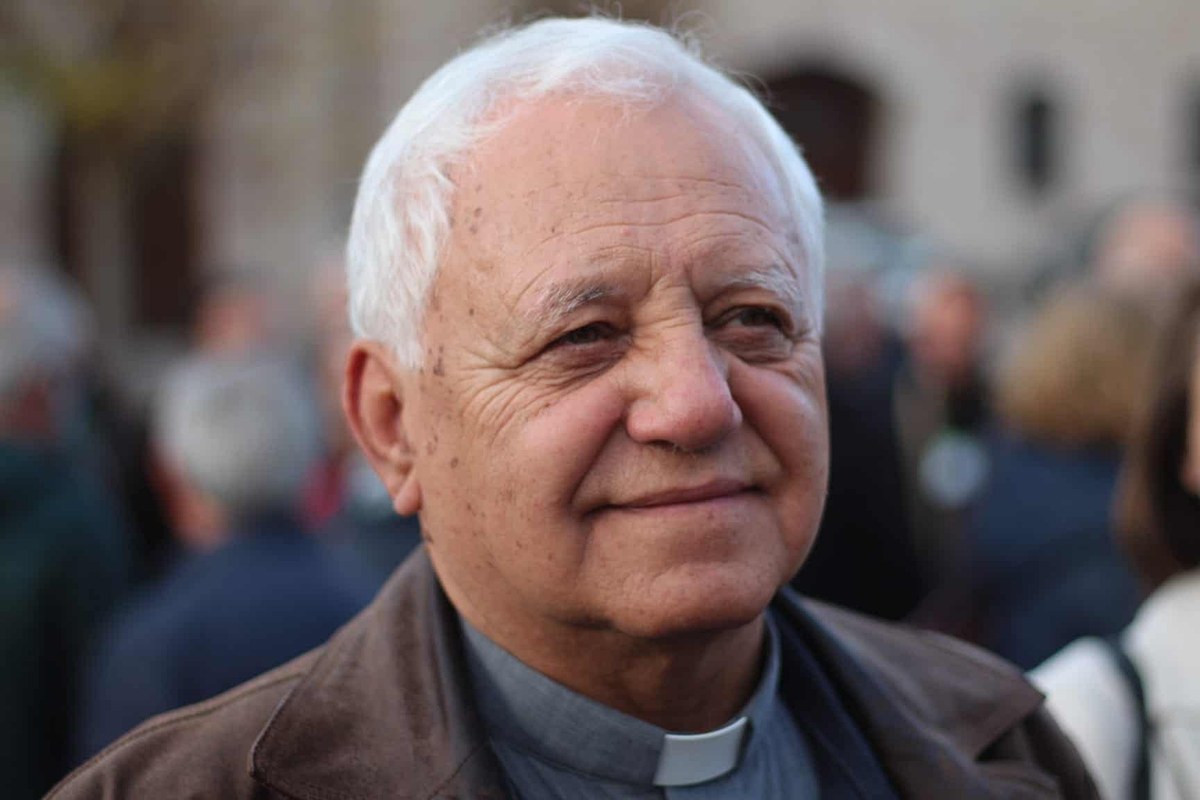
The decisive step came in the autumn of 1973, when Zagreb auxiliary bishop Mijo Škvorc, Monsignor Ivan Horvat and Father Vrane attended a Cursillo in Vienna. Škvorc saw in that experience a way of building the Church through open small communities and teaching connected with everyday life. Cardinal Franjo Kuharić entrusted him with introducing the movement in Croatia and placed the secretariat in Father Vrane’s care.
Samobor, 28 August 1974
Croatia’s first Cursillo began on 28 August 1974 at the Franciscan monastery in Samobor, today the Tabor House of Encounter. It was led by a team from Vienna headed by the Spanish Claretian Josef García Cascales, one of the leading promoters of the movement in the German-speaking world. The talks were translated for the Croatian participants. A second Cursillo was held on 29 November with support from Vienna; local teams then gradually assumed responsibility.
These beginnings took place under the Yugoslav communist regime, when organised Catholic movements faced serious restrictions. Even so, Cursillo endured through discretion, prayer and cooperation between priests and lay people. The earliest courses were held separately for men and women; mixed courses were introduced later.
From retreat houses to parish life
The movement initially developed in monasteries and pastoral centres. For a period, the Emmaus House in Hrvatski Leskovac was an important place for formation and community life. The organisation received ecclesiastical recognition through a 1982 decree confirming the Secretariat and a further decree in 1988 appointing Father Vrane as its leader.
Over time, Croatian Cursillo adopted a model centred more closely on parish communities. Teams travelled to local parishes and held the encounters there. This allowed the experience to continue through the Eucharist, prayer, friendship groups, Ultreyas and parish service. The movement also developed courses for adults, young people, confirmation candidates and married couples.
Krapanj and the transmission of faith between generations
The island of Krapanj, near Šibenik, became one of the most recognisable centres of Croatian Cursillo. At the Emmaus House in the Franciscan monastery, camps and retreats are held for secondary-school students, university students, young workers, families and veterans. The programmes combine formation, personal witness, small-group work, the Eucharist, adoration, confession and community life.
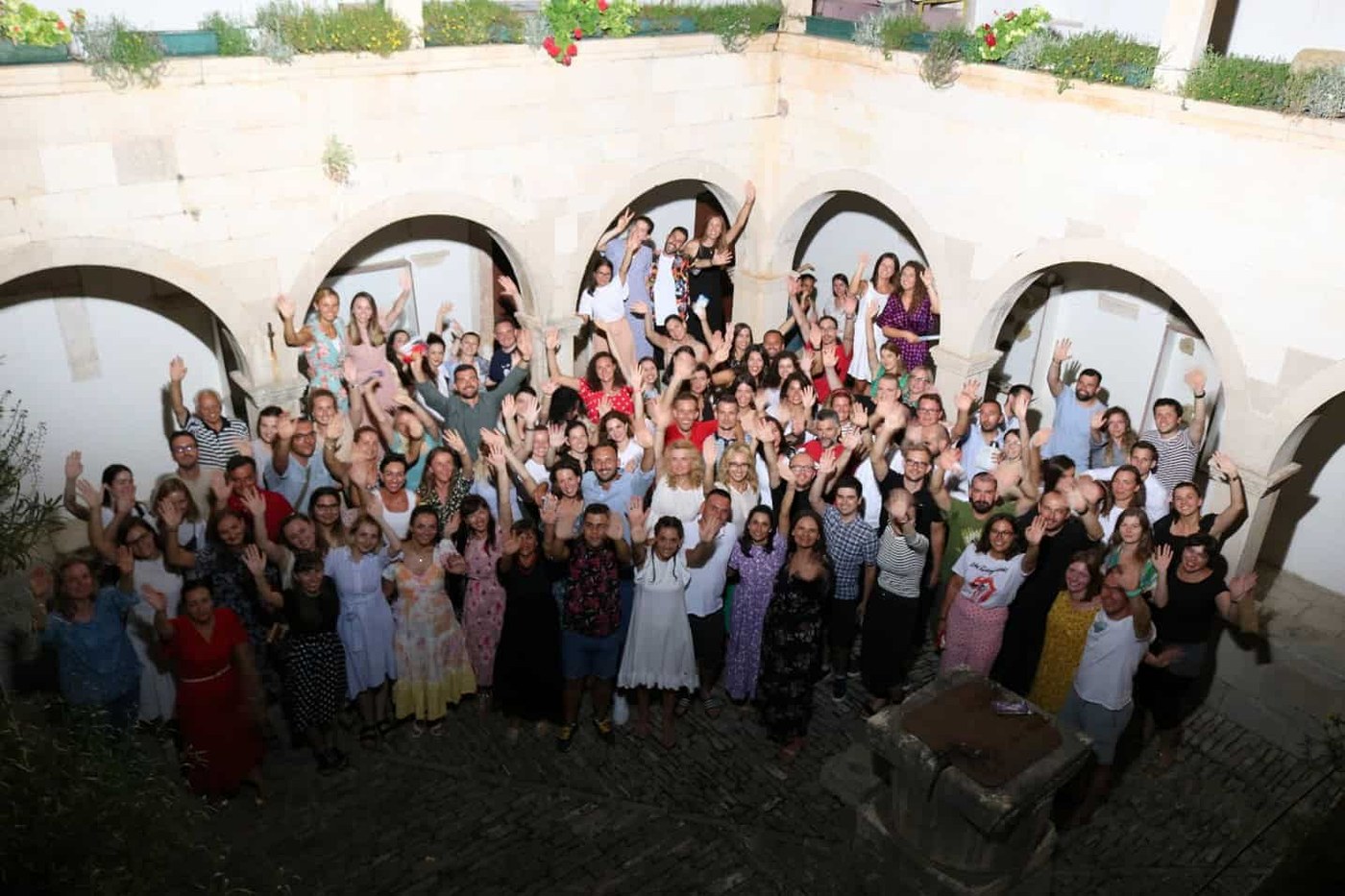
In the summer of 2021 alone, 252 secondary-school students, 89 university students, 169 young people, 99 families with more than 300 children and 100 veterans took part. More than one hundred leaders and around fifteen priests supported the different sessions. Krapanj therefore expresses a distinctive feature of Cursillo in Croatia: the transmission of faith between generations and the close relationship between spiritual experience, family life and community.
Fifty years on the journey
According to the historical summaries published by Cursillo Croatia and the OMCC, more than 1,500 Cursillos were held in 16 dioceses during the first fifty years, reaching more than 45,000 participants, together with over 1,000 one-day renewal gatherings. The movement built an extensive network of collaborators, leaders, priests and parish communities.
On 29 September 2024, more than one thousand people gathered at Tabor to celebrate the 50th anniversary. The Eucharist was presided over by Apostolic Nuncio Giorgio Lingua, joined by many priests and Bishops Emeritus Juraj Jezerinac and Josip Mrzljak. Delegations came from Spain, Austria, Hungary, Great Britain and the Czech Republic. Krešimir Percela, president of the Croatian Secretariat, gave the closing greeting.
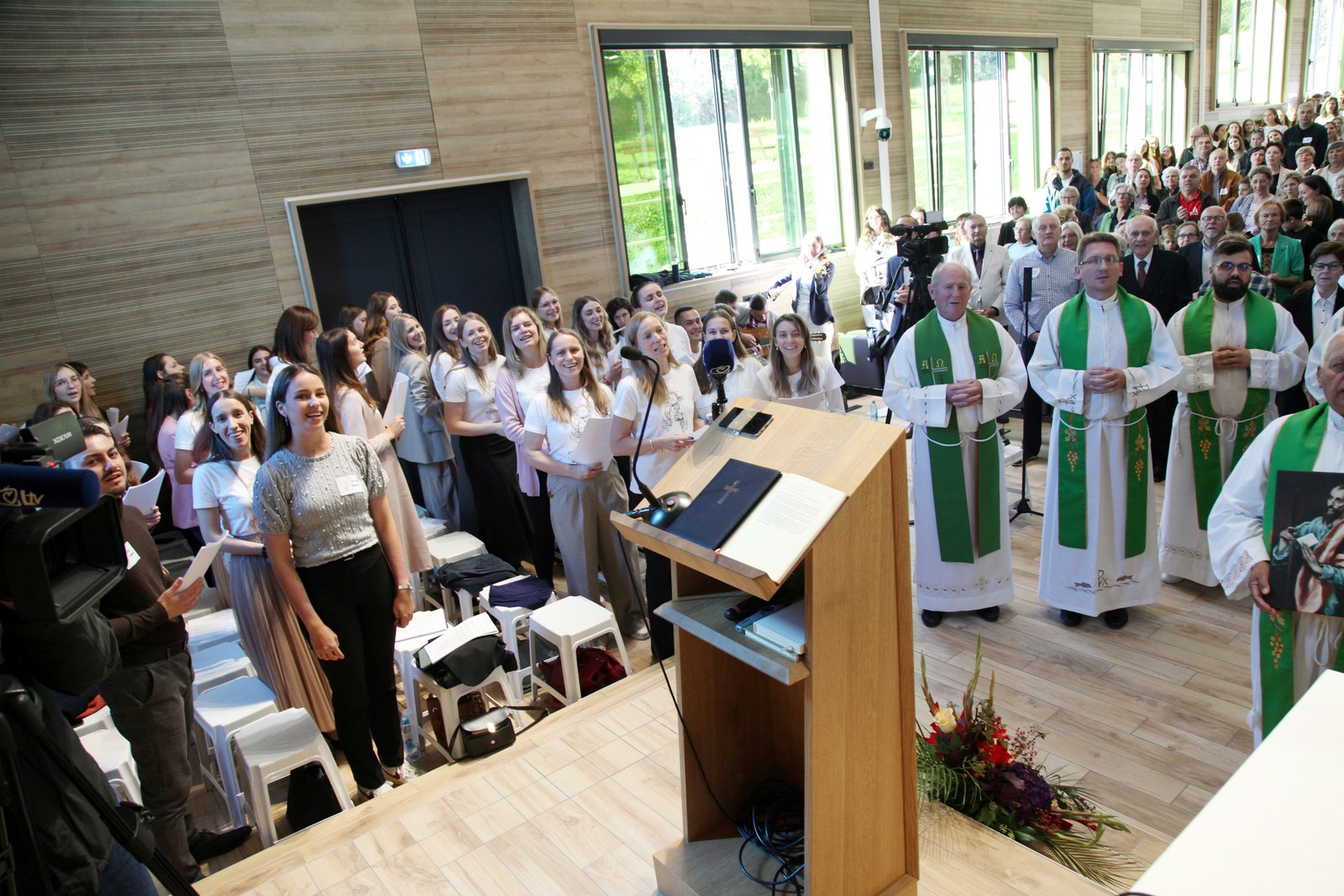
The celebration concluded with the singing of De Colores. Half a century after the first Cursillo, Croatia preserves the core received through Vienna and expresses it with a character of its own: Tabor recalls the beginning, the parishes represent its everyday presence and Krapanj makes continuity between generations visible. This combination of memory, friendship and service explains the vitality of a story that remains open to the future.
Sources
- Kursiljo Hrvatska — history in Croatia
- Kursiljo Hrvatska — Andrija Vrane
- Diocese of Varaždin — history of Cursillo in Croatia
- OMCC — Cursillo in Europe, Croatia
- OMCC — 50th Anniversary of Cursillo in Croatia
- IKA — 50th anniversary in Croatia
- Kursiljo Hrvatska — Krapanj 2021
Hashtags: #CursillosInChristianity #Cursillo #OMCC #Croatia #Kursiljo #DeColores