The deepest part of each person is the capacity to be loved and to love.
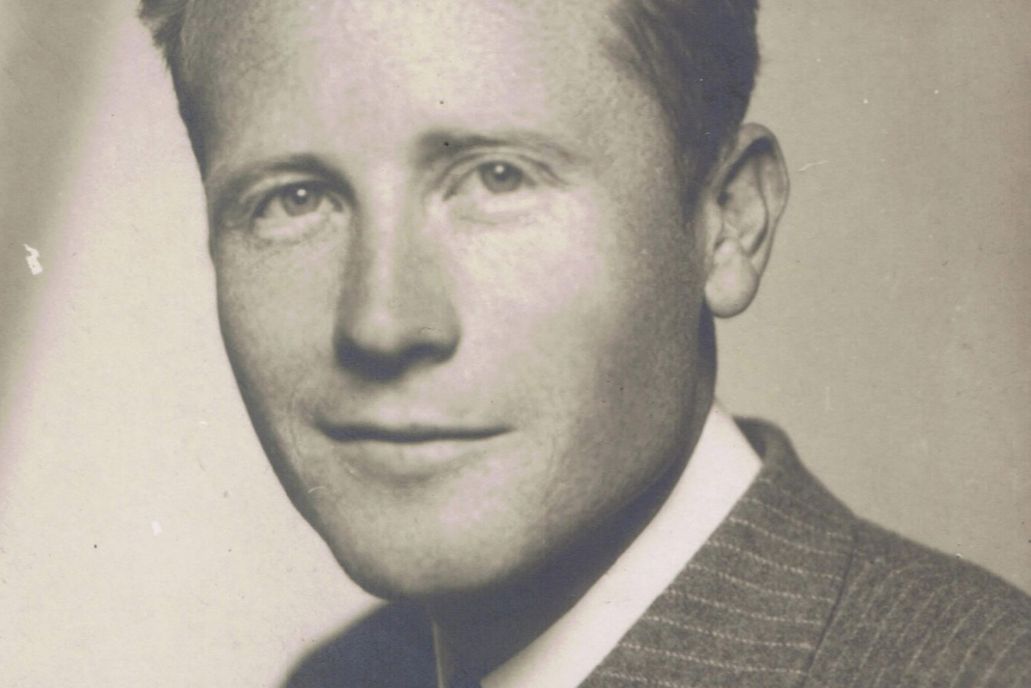
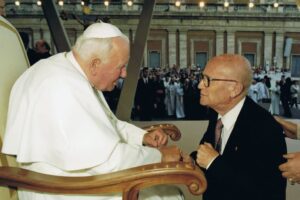 Eduardo viewed anthropology from the perspective of the human heart, not from morality or institutional structure. His most radical intuition was that human beings are made for relationships, for acceptance and response. The MCC was born precisely from this vision: not to impose burdens, but to awaken in each person what was already there, like a dormant seed. That is why the Cursillo does not begin by talking about rules, but about dignity; it does not begin with obligations, but with possibilities. In Eduardo’s view, evangelizing was always about awakening the capacity to love that God has placed in each person.
Christianity is not learned: it is lived, and by living it, it is contagious.
Eduardo had the firm conviction that the Christian message is, before doctrine, experience. It is not a matter of transmitting ideas—although ideas are important—but of sharing a life touched by Grace. That is why the central message of the Cursillo is not a discourse, but an encounter: that of the pilgrim with a living, normal, and close Christ. A leader may know a lot, but if he does not convey joy, confidence, and sincerity, his testimony is empty. What is contagious is life, not theory. The MCC works when leaders live in such a way that faith becomes credible, kind, and desirable.
God does not call us to be perfect, but to aspire to holiness.
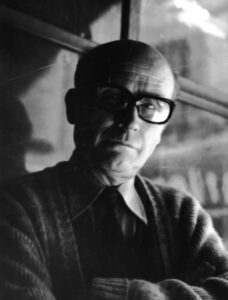 Eduardo deeply distrusted perfectionism and rigid religiosity. The perfect Christian does not exist; what exists is the real person, with their concrete history, who lets God enter into them. This vision avoids moralism and opens the way to the truth of the Gospel: God loves us as we are, and from there transforms us. Authenticity is the door to Grace. When the MCC is faithful to its charism, it does not produce uniform Christians, but free people who can live their faith without masks or molds, because they have discovered that God loves them unconditionally.
Grace makes no noise, but it changes everything.
Eduardo understood God’s action: gentle, silent, but irresistible. Grace does not burst in like terrifying thunder, but like a clarifying light; it does not enter as a command, but as an invitation. That is why, in the Cursillo, what is important is not spectacle or emotion, but the inner space where the person discovers that they are loved. Many Cursillistas told Eduardo that “nothing extraordinary had happened”… and yet everything had changed. That is the work of Grace: to make all things new without making a sound.
The fundamentals of Christianity, lived out in everyday life, are capable of transforming any environment.
Eduardo never imagined the MCC as an elite movement, nor as an experience reserved for those already within the Church. His dream was that each person, in their own environment—family, work, friendships, leisure—would live the essence of the Gospel naturally, without labels or artificial discourse. What is fundamental is not external practices, but a life that breathes Christ. When this happens, environments change: not through pressure, but through witness; not through strategy, but through an incarnate and daily Christian presence. This is where the evangelization of environments begins. Environments are not evangelized if the person is not evangelized.
The Cursillo is not about doing things, but about the person being themselves in Christ.
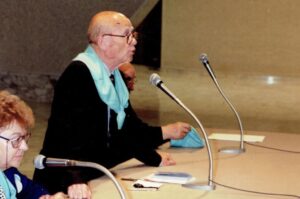 Eduardo wanted to prevent the MCC from becoming a mere machine for activities. The goal is not to fill agendas or manufacture militants, but to bring each person back to their center, to help them discover who they are before God and what their deepest truth is. When a person “is,” things “happen”: action arises spontaneously from the encounter with Christ, not from external pressure. This is the heart of the post-cursillo: accompanying the person in their process of being—not doing—so that their life acquires unity, joy, and mission.
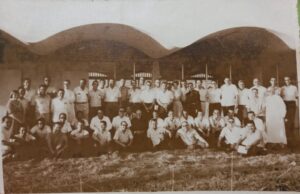
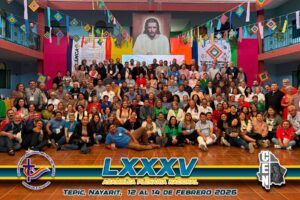
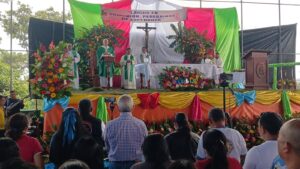
Images taken from the Eduardo Bonnín Foundation.