The MCC in the Altiplano region.
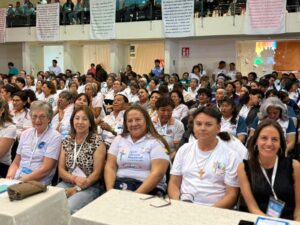 The history of the Cursillos in Christianity Movement in Bolivia is, above all, a story of encounters that transform. It is a story in which God has known how to use specific people, their talents, their searches, and even their doubts to ignite a path of faith, friendship, and mission in the country that continues to bear fruit today.
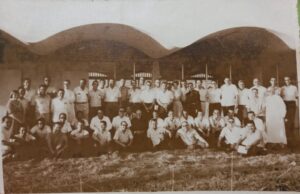
It all began almost by “divine chance.” In 1954, two young Bolivians traveled to Madrid to complete their law studies. They were Alfonso Prudencio and Jorge del Villar, well-known figures among Spanish university students for their friendliness, intelligence, and overwhelming personalities. Neither of them was particularly religious: Prudencio trusted politics more than God, and Del Villar—nicknamed “the Indian”—felt closer to Marx than to Christ.
But God has his own way: he comes in unexpected ways and uses leaders to reach many.
Both young men were invited to attend a Cursillo in Christianity… and there everything changed. They emerged from those days profoundly transformed, embracing a living faith and a clear mission. They soon became leaders: Rector Prudencio, Rector Del Villar, and later, “El Indio” himself became National Director of Cursillos within the Superior Council of JACE.
At the end of 1956, they returned to Bolivia carrying in their hearts that fire that cannot be hidden. In a matter of months, they managed to arouse enormous enthusiasm for the Movement among the young people of La Paz. With the support of Monsignor Armando Gutiérrez, auxiliary bishop, the first Cursillos for men and women were held there in early 1957, officially marking the birth of the Bolivian MCC.
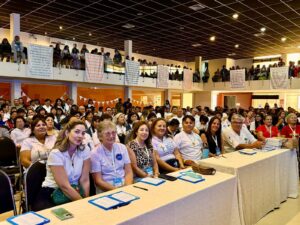 The growth was surprising. Very soon the Movement spread to Cochabamba, Sucre, Santa Cruz, Oruro, and other dioceses. There was a shortage of priests who had experienced the Cursillo, but there was no shortage of apostolic enthusiasm. Therefore, during the early years, the talks were given almost exclusively by lay people, while the priests collaborated with the Eucharist and confession. In practice, Prudencio acted as “the” Rector and Del Villar, with his rediscovered mystical passion, acted as an improvised Spiritual Director, preaching meditations and spiritual rolls with contagious ardor.
History preserves a unique anecdote: until 1961, the Sacraments Rollo in Bolivia was always given by lay people. This is a precious example of how the Bolivian MCC was born deeply rooted in lay co-responsibility.
Although there was a decline in La Paz around 1958 due to a lack of priestly accompaniment, the Movement flourished strongly in Cochabamba and Oruro. There, thanks to the support of Fr. Gaudet, Provincial Vicar of the Oblates, the first Cursillos for adults began to be held, definitively consolidating the MCC. In a very short time, the Movement gained the approval and blessing of the Bolivian episcopate, which recognized it as an authentic instrument of Christian renewal.
Today, looking back on this history, we discover a message of hope:
God does not call the perfect; he perfects those he calls.
He used two “distant” young people, touched them in a Cursillo, and through them opened a path of the Gospel for an entire nation.
The MCC in Bolivia continues to walk with the same joy, the same zeal, and the same spirit of the fourth day that animated those pioneers. And its history reminds us that when a heart allows itself to be found by Christ, friendship becomes mission and environments begin to change.
De Colores, Bolivia!
May hope continue to shine in every Cursillista, in every ultreya, and in every environment where the fundamentals of Christianity are proclaimed.