The history of the Cursillos de Cristiandad Movement in Costa Rica began, like so many authentic evangelical stories, in a simple and almost silent way. It did not arise from an elaborate project or meticulous pastoral planning, but rather from a personal encounter with a living experience of faith and a sincere desire to share it. It was in 1964, during a meeting of the Christian Family Movement held in Peru, that José Miguel Alfaro Rodríguez and Dr. Hermes Sánchez Borbón came into direct contact with the Cursillos de Cristiandad. That experience did not leave them indifferent. In it, they discovered a new—and at the same time deeply evangelical—way of proclaiming the fundamentals of Christianity, capable of touching people’s hearts and transforming daily life from within.
 Upon returning to Costa Rica, both began to enthusiastically share what they had experienced. They did not speak of theories or structures, but of specific people, simple conversions, Christian friendship, and a faith that became life. Little by little, that concern caught on with other committed lay people, who also perceived the need for a renewing impulse in the pastoral ministry of the Costa Rican Church, especially with regard to the protagonism of the laity in their own environments.
In this initial process, the figure of Antonio Willis, a Costa Rican living in Mexico and already a Cursillista, was decisive. He acted as a bridge between the experience lived in other countries and the ecclesial reality of Costa Rica. Thanks to his mediation, it was possible to count on the accompaniment of experienced teams with a deeper knowledge of the method and spirit of the Movement. However, alongside the lay initiative, the pastoral support of the local Church was equally fundamental. In this sense, the openness and discernment of Enrique Bolaños Quesada, then Bishop of Alajuela, marked a key point. His prudent yet confident attitude allowed that apostolic concern to translate into a concrete event: the celebration of the first Cursillo de Cristiandad on Costa Rican soil.
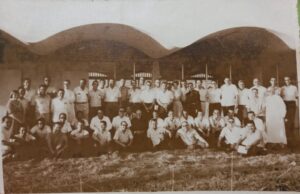
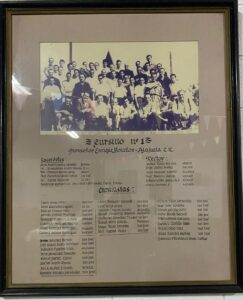
Thus, from December 5 to 8, 1964, the Diocese of Alajuela witnessed an event that would leave a deep mark on the pastoral history of the country. A team made up mostly of Mexicans, accompanied by Costa Rican Cursillistas who had already lived the experience outside the country—among them Antonio Willis, Jorge Castro, and Mario González Saborío—launched the first Cursillo de Cristiandad in Costa Rica. Those days were marked by simplicity, fraternity, and an intense spiritual experience. Without great pretensions, but with a deep inner conviction, the fundamentals of Christianity were proclaimed and a climate of friendship was created that allowed many to rediscover the faith as a personal encounter with Christ and as a call to a committed life.
The fruits were not long in coming. That first Cursillo awakened a contagious enthusiasm and a clear awareness that something new was being born in the Costa Rican Church. Far from remaining an isolated experience, it became the starting point of a process that would soon spread to other dioceses. Just a few months later, from March 18 to 21, 1965, the first Cursillo de Cristiandad was held in the Archdiocese of San José, again with the support of a Mexican team and the active collaboration of Costa Rican Cursillistas.
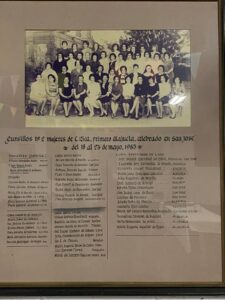 That same year, a decisive step was taken toward the maturity of the Movement: the first Cursillo with an entirely Costa Rican team was held in San José, coordinated by Jorge Baudrit Gómez, who was then called Rector. This event meant much more than an organizational change. It meant that the charism had been assumed, understood, and embodied by the local Church, which was beginning to make it its own with responsibility and confidence.
The process of consolidation continued to advance with serenity and firmness. In 1967, the Diocese of Alajuela celebrated its first Cursillo with an entirely national team, under the coordination of Hiram Sotela Montagné. From then on, the Cursillos began to spread rapidly to other ecclesiastical districts in the country, reaching the diocese of Tilarán, San Isidro de El General, and the Apostolic Vicariate of Limón. Wherever the Movement was established, the Ultreyas naturally emerged as a privileged space for perseverance, fraternal communion, and apostolic sending.
From the early years, the MCC in Costa Rica understood the importance of caring for life after the Cursillo. Therefore, along with numerical growth, diocesan secretariats and schools for the formation of leaders were created, convinced that fidelity to the charism and method was a guarantee of apostolic fruitfulness. This formative effort allowed many lay people to assume their vocation and mission in the Church with greater awareness, responsibility, and joy.
Thus, from that seed sown in 1964, the Cursillos in Christianity Movement grew in Costa Rica as a living and deeply ecclesial reality. Priests and lay people, walking together, discovered that evangelization of environments is not an extraordinary task reserved for a few, but a concrete call to live the Gospel in ordinary life. With simplicity, friendship, and joy, the MCC left a lasting mark on the history of the Costa Rican Church, confirming once again that when the Holy Spirit acts, small seeds can bear abundant fruit.