How a Spanish priest and a small group of laypeople founded one of the most influential Cursillo movements in Latin America in 1959.
When writing the history of the Cursillos in Christianity Movement in Latin America, Venezuela holds a truly special place. Not only was it one of the first countries on the continent to embrace this providential instrument of evangelization, but it was also the source of a missionary impetus that would help bring about the birth and consolidation of the Movement in numerous American countries.
The story begins with a Spanish priest who never imagined that a temporary mission would change the lives of thousands of people forever.
A Providential Priest
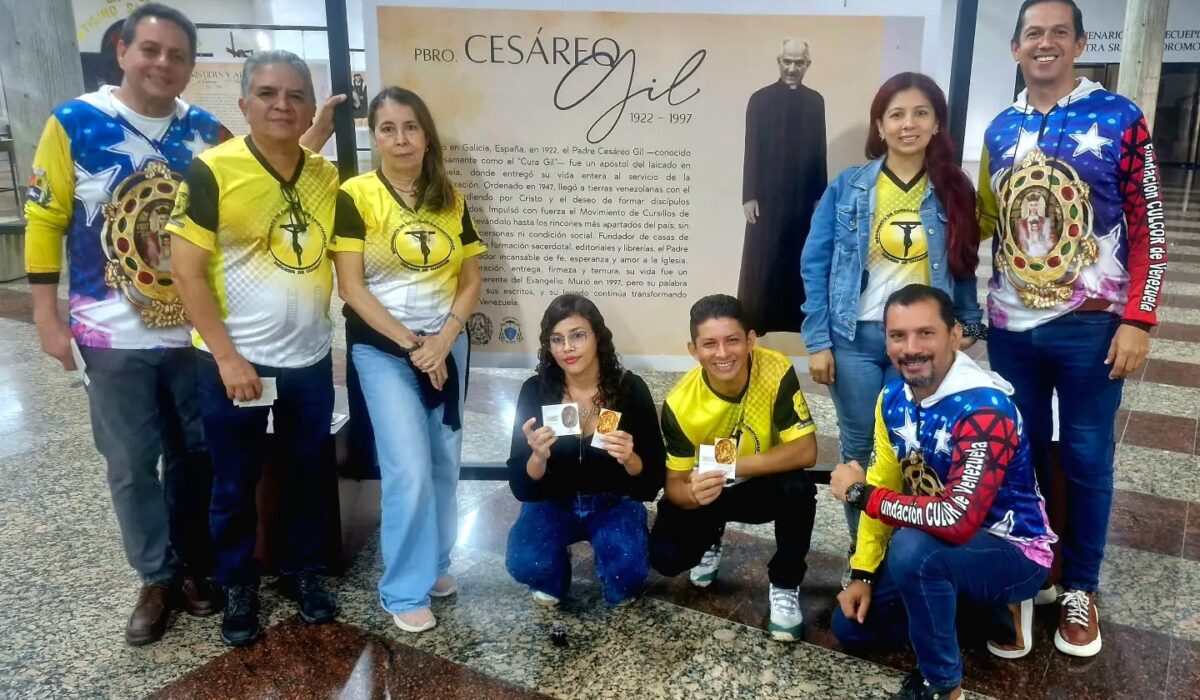
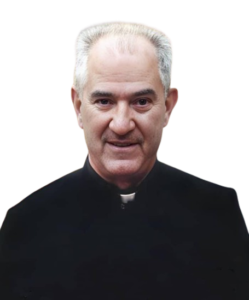 On April 3, 1959, Father Cesáreo Gil Atrio, a priest of the Diocesan Workers, arrived in Caracas, sent from Spain to carry out a mission completely different from the one he would ultimately undertake.
He had been introduced to the Cursillos de Cristiandad a few years earlier, during his ministry in Tuy-Vigo. That experience profoundly transformed his understanding of evangelization. From then on, he devoted himself intensely to the Movement, leading Cursillos and serving as Diocesan Advisor until his superiors assigned him to Venezuela.
Nothing suggested that this new phase would mark a turning point in the history of the Latin American Cursillos Movement.
A Conversation That Changed History
A few days after arriving in Caracas, Father Cesáreo was received by the archbishop, Monsignor Rafael Arias Blanco. Initially, his mission was to await the decision of the Episcopal Conference, so he began by teaching some classes at La Salle School.
However, a priest as dynamic as he was did not take long to ask for new responsibilities. During a conversation with the archbishop, he mentioned his experience with the Cursillos de Cristiandad held in Spain. That simple reference immediately piqued the prelate’s interest.
The response was as unexpected as it was decisive:
—“Organize the Cursillos in Caracas.”
That request would give rise to one of the Movement’s most fruitful stories in the Americas.
Adapting the Charism to a New Reality
 Archbishop Arias understood that the Americas had social and pastoral characteristics different from those of Europe. For this reason, he asked Father Cesáreo to meet three conditions before beginning.
The first was to learn about the Colombian experience, where the Movement was already present. The second was that the Cursillos should also be designed for married couples and the Venezuelan family context. The third was to maintain close communion with Catholic Action to avoid any pastoral conflict.
These guidelines reveal a constant that would always accompany the Venezuelan MCC: full communion with the Church and the ability to adapt the method without losing the charism received.
The Trip to Colombia
With limited financial resources, Father Cesáreo undertook a long road trip to Bogotá.
There, he was able to gain firsthand knowledge of the Colombian experience, meet with priests and lay leaders, and carefully study the development of the Cursillos.
That visit confirmed something that would later become one of Venezuela’s great contributions to the Movement: the importance of the Poscursillo, the Group Meeting, and the Ultreya as essential elements for the perseverance of Cursillistas.
The Birth of the Movement in Venezuela
With the archbishop’s approval, preparations began.
They had to find a team, a location, candidates… and, above all, trust in Providence.
Father Cesáreo brought together an extraordinary group of collaborators, among whom Jorge “El Indio” del Villar—a pioneer of the Cursillos in Bolivia—stood out, along with Antonio Romeu, Father Digno Mariño, and numerous laypeople who understood the importance of that work from the very beginning.
Finally, on August 20, 1959, the first Cursillo de Cristiandad for men held in Venezuela began in Caracas.
A week later, on August 27, the first Cursillo for women was held, thus fulfilling the archbishop’s wish that the Movement also reach families through the evangelization of both spouses.
The Cursillos de Cristiandad Movement in Venezuela had officially been born.
The First Venezuelan Leaders
 From the beginning, it was clear that the Movement could not depend solely on those who had come from Spain.
It was necessary to train its own leaders.
Thus, the first men’s and women’s Secretariats were established, and the future School of Leaders began to take shape. Just a few months later, the first Venezuelan rectors—both male and female—were already in place, as were several priests prepared to serve as Spiritual Directors.
The seed was beginning to bear fruit with extraordinary speed.
Expansion Throughout the Country
Just one year after the first Cursillos were held in Caracas, the Movement began to spread throughout Venezuela.
Maracaibo was the first diocese outside the capital to host the Cursillos in 1960. Next came Maracay, Barquisimeto, Valencia, and, in a very short time, Cumaná, Coro, Mérida, Maturín, Ciudad Bolívar, Calabozo, Machiques, and San Cristóbal.
The growth was so rapid that it necessitated greater national coordination.
The First National Assembly
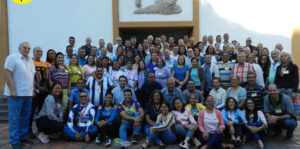 One of the most important events of this early stage was the holding, in July 1961, of Venezuela’s first Cursillo for Leaders.
More than a hundred people participated, including laypeople, priests, and bishops, accompanied by leaders who had come from Spain. Immediately afterward, the Movement’s First National Assembly took place, considered one of the most momentous events in the history of the Venezuelan MCC because it allowed for the unification of criteria, the strengthening of the method, and the consolidation of the Movement’s identity.
Those days marked the beginning of a new stage of maturity.
Recognition by the Church
The Movement’s growth was supported at every step by the Venezuelan hierarchy.
On October 21, 1961, the Episcopal Conference authorized the creation of the National Secretariat.
A few months later, on February 21, 1962, it approved the Guidelines for the Cursillos in Christianity Movement in Venezuela and officially appointed Father Cesáreo Gil as National Advisor and Blas and María Luisa Lamberti as national presidents.
This was the official recognition of a reality that was already transforming the lives of thousands of people.
An Influence That Crossed Borders
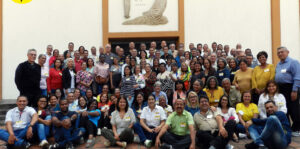 Venezuela’s importance within the Cursillos Movement extends far beyond its own borders.
Many Venezuelan leaders later contributed to the birth and development of Cursillos in other Latin American countries. Their experiences, their reflection on the method, the organization of the School for Leaders, and the consolidation of the Poscursillo program exerted a decisive influence on the Movement’s growth across the continent.
It is no coincidence that numerous MCC historians consider Venezuela one of the countries that contributed most to shaping the Latin American character of the Cursillos de Cristiandad.
A story that continues to be written
From that distant August 20, 1959, to the present day, thousands of Venezuelans have discovered, thanks to the Cursillos de Cristiandad Movement, the joy of a personal encounter with Christ.
Father Cesáreo Gil’s intuition, Bishop Arias Blanco’s trust, and the generous dedication of the first leaders allowed a small seed sown in Caracas to grow into a lush tree whose branches reached much of the American continent.
Today, that story continues to be written every time a new Cursillista discovers that Christ loves him or her, that the Church needs him or her, and that the best way to evangelize the world remains friendship lived out in grace. For, as the history of the Movement has shown time and again, when God finds open hearts, a small seed can transform an entire country.