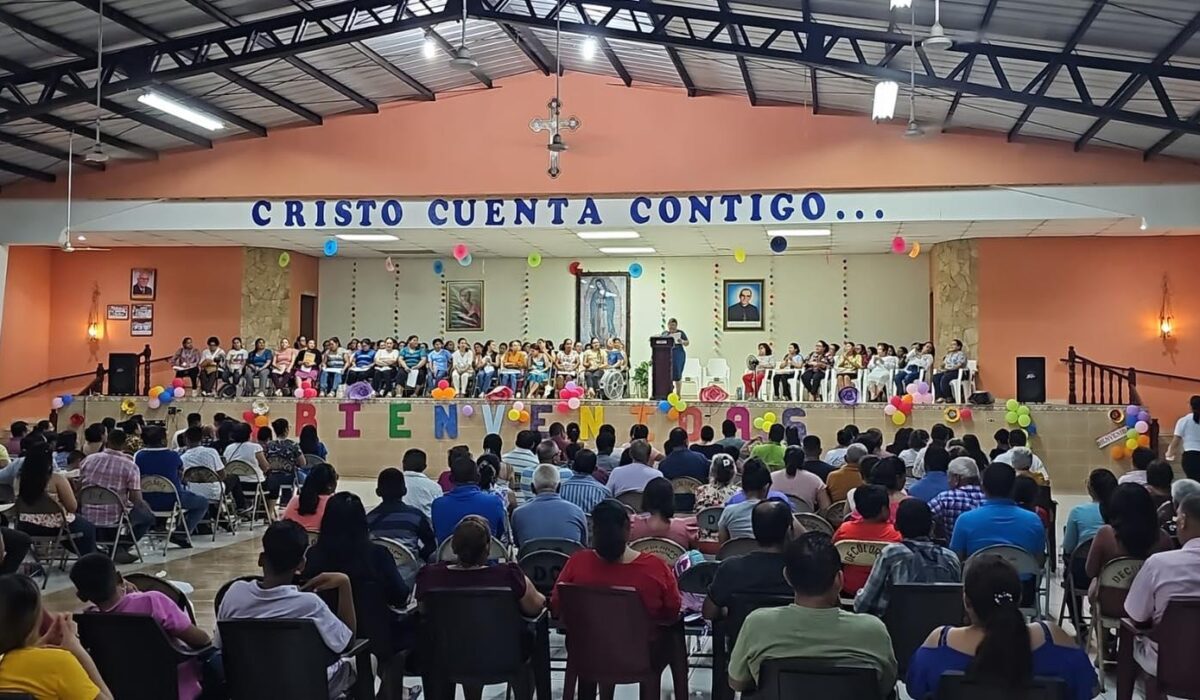
A story that began with a promise
To speak of the history of the Cursillos in Christianity Movement in El Salvador is inevitably to speak of providence. And that providence has specific names: María Teresa Mateu and Antonio Punyed.
An encounter in Spain that changed the course
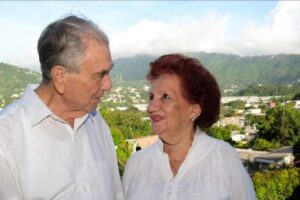 On October 12, 1955, in Creixell (Tarragona), Cursillo de Cristiandad No. 12 came to a close. Among the new Cursillistas was Antonio Punyed. That Cursillo was not a simple spiritual retreat; it was the beginning of an apostolic vocation.
A year later, Antonio was called to the Cursillo Teachers’ School. He experienced a Cursillo as an assistant and another as a speaker, proclaiming the talk “Study.” The charism had taken root in his heart.
In Spain, he also met María Teresa Mateu. The encounter between the two was not only human; it was apostolic. They dreamed together. And that dream would cross the Atlantic.
On September 28, 1958, Antonio arrived in San Salvador, fulfilling the promise he had made to María Teresa. On November 30 of that same year, they celebrated their marriage. Thus began, quietly, the history of the MCC in El Salvador.
A letter and an open door
Before leaving, Antonio asked Cardinal Benjamín de Arriba y Castro for a letter of introduction as leader of the MCC in Tarragona. He did not arrive as an enthusiastic improviser, but as a trained and sent leader.
With that letter, he and María Teresa presented themselves to Monsignor Luis Chávez y González, Archbishop of San Salvador. The response was clear and pastoral: San Salvador was at his disposal, but he must first get to know the environment.
Faithful to the original strategy of the MCC—to evangelize from a deep understanding of reality—Antonio immersed himself in Salvadoran society. There was no rush. There was discernment.
1962: The first Cursillo
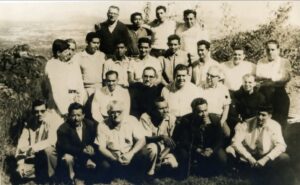
From November 27 to 30, 1962, the first Cursillo de Cristiandad for men was held in El Salvador. Seventeen men lived that founding experience.
The team was made up of:
- Rector: Antonio Punyed
- Rollista: Arturo Punyed
- Auxiliaries: Francisco Huget, Ernesto Criollo, and Manuel Rivera
- Spiritual Directors: Fr. José Inocencio Alas and Fr. Bautista (Franciscan, Cursillista from Murcia)
Among the participants was a young priest, parish priest in San Miguel: Fr. Oscar Arnulfo Romero.
Óscar Arnulfo Romero
That priest, who years later would become Archbishop of San Salvador and a martyr of the Church, lived his Cursillo like everyone else, allowing himself to be impacted by the kerygmatic proclamation.
The closing ceremony was presided over by Monsignor Arturo Rivera Damas, Auxiliary Bishop of San Salvador, another name that would profoundly mark the ecclesial history of the country.
1966: The institutional moment — the National Secretariat is born
 Four years after the first Cursillo, the Movement had taken root enough to take a decisive step: its national structuring.
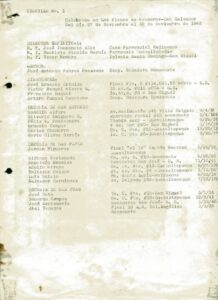
On March 16, 1966, at 8:30 p.m., priests and laypeople gathered at Casa San Pablo in San Salvador to formally establish the National Secretariat of Cursillos de Cristiandad of El Salvador. The session opened, as it could not be otherwise, with an invocation to the Holy Spirit.
Minutes No. 1 NATIONAL SECRETARIAT…
It was not a simple administrative act. It was the ecclesial confirmation of a work that was already alive.
The Decree of the Salvadoran Episcopate that made the National Secretariat official was read aloud. The Church not only allowed the Movement: it recognized it and assumed it as its own.
The Secretariat was constituted as follows:
- National Advisor: Monsignor Lorenzo Graziano
- National Director: Fr. José Inocencio Alas
- National Vice-Director: Fr. Camilo Girón
- National Secretary: José Antonio Punyed Recanses
- Treasurer: Dr. Oscar Francisco Segreda
And as members, priests and laity, among them Fr. Oscar Arnulfo Romero himself
Acta No. 1 NATIONAL SECRETARIAT…
Here something deeply significant is revealed: the MCC in El Salvador was born and grew in full communion with the hierarchy, with the active participation of those who would later become decisive figures in the Salvadoran Church.
It was not a parallel movement. It was ecclesial from its inception.
A blessing for the nation
 The Cursillos in Christianity Movement in El Salvador was not simply an import from Spain. It was an incarnation of the charism on Salvadoran soil.
It was born of a missionary couple.
It was discerned by a prudent archbishop.
It was consolidated with episcopal support.
Among its members was someone who would become a saint and martyr.
The Salvadoran MCC experienced the tensions inherent in the country’s history, but it preserved its essence: proclaiming the fundamentals of Christianity, forming leaders, and fermenting the environment.
Today, looking back, we can affirm that that night of March 16, 1966, was not just the drafting of a document. It was the silent proclamation that the Holy Spirit had wanted to plant in El Salvador a current of grace destined to endure.
And like every authentic story of the Movement, it began with a personal experience of encounter with Christ… and with a promise fulfilled.
De Colores.