There are stories that do not begin with grand human plans, but with a heart touched by Grace.
This is how the Cursillos in Christianity Movement began in Guatemala.
It was 1962. A Guatemalan priest, Father Ricardo Hamm, participated in a Cursillo in Mérida, Mexico. There he discovered not only a method, but also an experience. He discovered that Christianity was not a theory, but a living encounter with Christ. And as always happens in the MCC, when someone truly experiences the First Proclamation, they cannot remain silent.
Upon returning to Guatemala, he asked for authorization from the then Archbishop, Monsignor Mariano Rossell y Arellano. The Church welcomed the charism. And so, what had begun as a spark began to ignite hearts in Guatemalan soil.
The first “yes” that changed everything
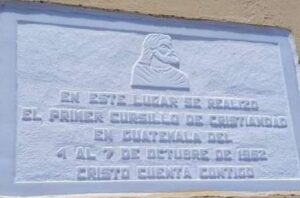
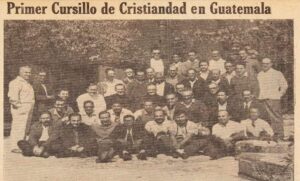 From October 4 to 7, 1962, the First Men’s Cursillo was held at the Hotel Aurora in Antigua Guatemala. Thirty participants. A mostly Mexican team. And one Guatemalan, José García Bauer, as an assistant. The group was small… but the dream was immense.
Those days were not just talks. They were a clear and direct announcement:
God loves you. Christ lives. And he is counting on you.
Four years later, in September 1966, the First Women’s Cursillo was held. Six women had previously traveled to Mexico for training. That detail says it all: the MCC is not improvised; it is prepared, prayed for, and lived in community.
From mission received to mission assumed
Growth was rapid, but not superficial. By mid-1965, the first School for Leaders already existed. It was not just a matter of giving Cursillos, but of training apostles who were aware of their mission in their environments.
By the seventh Cursillo, in 1966, the team was entirely Guatemalan. Father Jorge Toruño was the spiritual director and Augusto Hurtarte was the rector. The charism had become incarnate in the country. It was no longer something brought in from outside; it was a life of its own.
Here we see a constant in the history of the MCC:
first comes the proclamation, then friendship is born, and then apostolic responsibility emerges.
Grace generates structure, not the other way around.
Expansion: when friendship becomes leaven
 The Movement spread to other dioceses: Jalapa in 1968, Izabal in 1970, and progressively to the rest of the country. What began in Antigua Guatemala began to spread through mountains, cities, towns, and communities.
It was not a strategic expansion in human terms. It was the natural consequence of men and women who, after their Cursillo, decided to live their faith in their own specific sphere: in the family, at university, at work, in politics, in culture.
That is the heart of the MCC:
not to change structures from above, but to transform environments from within, through friendship and witness.
Guatemala today: perseverance and hope
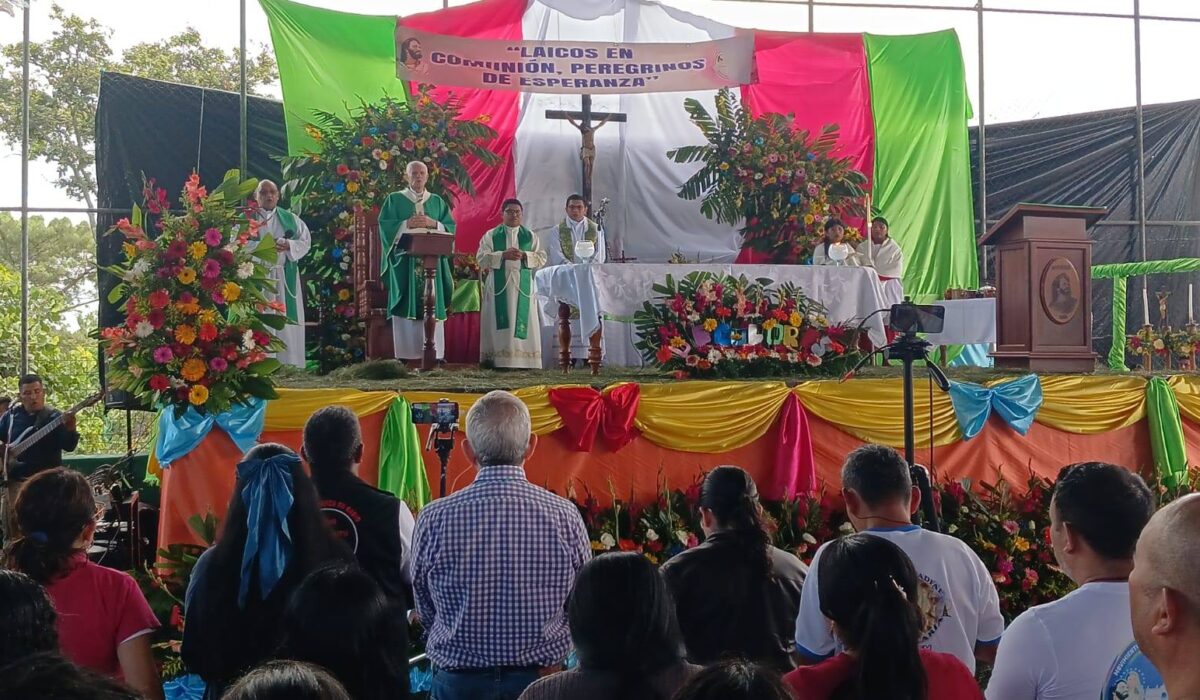
Today, the MCC is present in the archdioceses, dioceses, prelature, and apostolic vicariate of the country. Each has its own secretariat and school for leaders. National Ultreyas, meetings, and celebrations are held, especially on the Solemnity of Christ the King.
But the most important thing is not the numbers or the structures.
The essential remains the same as in 1962:
- A Precursillo that seeks specific people.
- A Cursillo that proclaims the fundamentals of Christianity.
- A Poscursillo that sustains life in friendship and community.
Guatemala is not simply a place where “there are Cursillos.”
It is a land where the First Proclamation continues to resonate.
History of Grace
 If the history of the MCC in Guatemala teaches us anything, it is that Grace precedes, accompanies, and sustains everything. From that priest who allowed himself to be touched in Mexico, to every leader who today prepares a rollo in any diocese in the country, there is an invisible thread that unites generations.
It is not just an institutional history.
It is a history of conversions.
It is a history of friendships that evangelize.
It is a history of men and women who discovered that being a Christian is the best thing that can happen to a person.
And that history… continues.
Because as long as there is someone willing to say “yes” to the Lord in their environment, Cursillo will continue to be relevant.
As long as there is a School that cares for the mentality and purpose, the charism will remain alive.
As long as there is an Ultreya where life is shared, Guatemala will continue to be a land of colors.
Of colors, Guatemala. 🌈