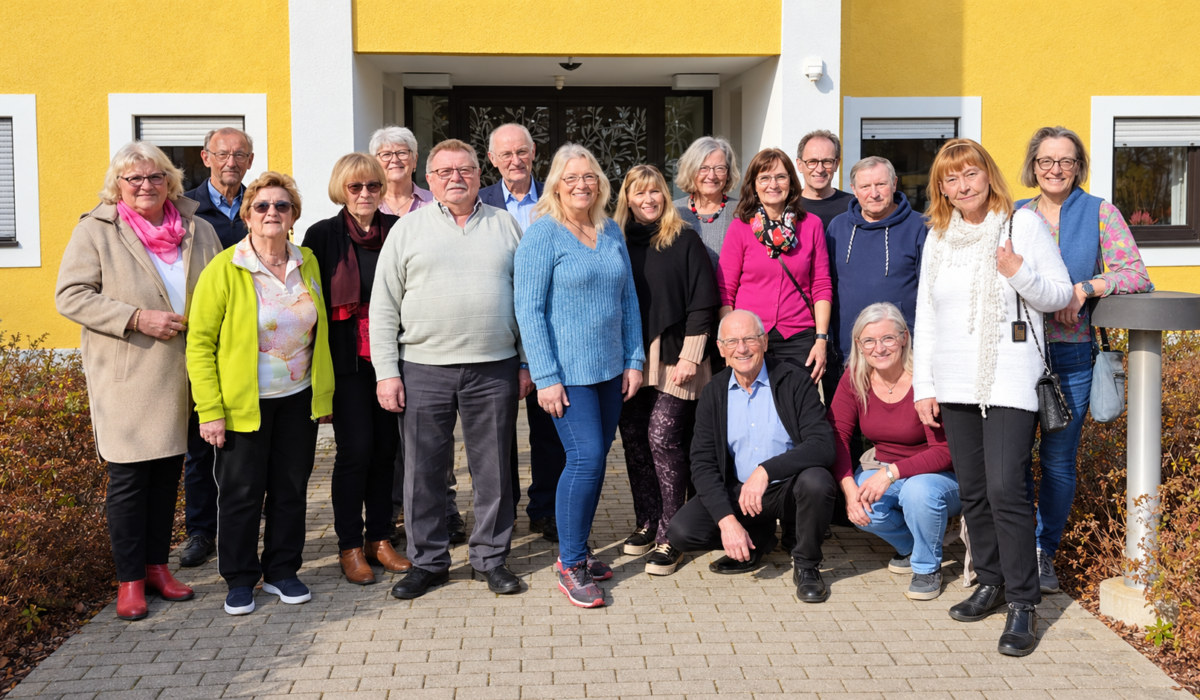
 The history of the Cursillos in Christianity Movement in Germany began by crossing a border. Just a few years after the Cursillos had begun to spread throughout Europe, the experience—which was already bearing its first fruits in Austria—found a new path into Germany. It was 1961, and behind that venture was, once again, the enthusiasm of people convinced that what they had received could not be kept just for themselves.
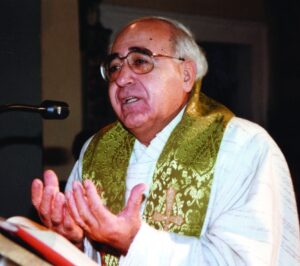
Fr. José García-Cascales, a Spanish Claretian and a key figure in bringing the Cursillos to Central Europe, had actively participated in establishing the Movement in Austria, where the first German-language Cursillo had been held in Vienna in June 1960. That same year, the World Eucharistic Congress in Munich facilitated new encounters and contacts. Among these were those established with members of the Legio Mariae from the Diocese of Rottenburg, who would help pave the way for the experience to reach Germany as well.
March 1961: The Journey Begins
From March 10 to 13, 1961, the first men’s Cursillo in Germany was held at the St.-Theresienheim in Moos, Eriskirch, on Lake Constance within the Diocese of Rottenburg. That place would come to be remembered as the cradle of the German Cursillo.
 The early days were not merely about holding a few days of Cursillo. The goal was to ensure that this experience took root. With effort and perseverance, the Ultreya, the School for Leaders, and the first coordination structures began to take shape. Little by little, German leaders emerged who were capable of taking on responsibility for the Movement and passing on to others what they themselves had discovered.
Growth was rapid. During 1961, new men’s Cursillos were held, and the following year, the first Cursillo for women also took place in Moos. From those first groups, the Movement began to spread to other German dioceses and cities: Munich, Regensburg, Augsburg, Hildesheim, Osnabrück, Limburg, and Essen were some of the places where this new experience of evangelization found a foothold.
A Church That Also Spoke the Language of Immigrants
Germany in those years was also welcoming thousands of workers from other European countries. Among them were many Spaniards who had left their homeland in search of work and a better future.
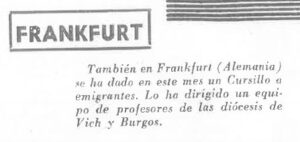
The Cursillo also sought to reach out to them. In mid-1962, Cursillo experiences aimed at Spanish immigrants began to be held, with the collaboration of leaders who had come from Spain. They did not have the same continuity as the German-language Cursillos and were held more sporadically, but they are part of a story that deserves to be remembered: that of a Church striving to accompany people living far from their homeland, their families, and their communities of origin.
In a way, the Movement was once again doing what it had done from the very beginning: reaching out to people wherever they were.
When Even the Iron Curtain Was Not to Be a Border
But there was still a border that was much more difficult to cross. Europe was divided into two major blocs, and the so-called Iron Curtain separated countries, peoples, and Christian communities. In that context, a desire also arose in Central Europe for the Cursillos to reach Christians living on the other side.
Austria played a particularly important role in this endeavor, aided by its geographical position and the contacts it established with neighboring countries. Germany also shared in that Central European vision, which held that political borders could not become barriers to evangelization. Beginning in the 1970s, paths began to open up that allowed the Cursillo experience to reach countries east of the Iron Curtain as well.
That determination to cross borders speaks volumes about a generation of Cursillistas who had grasped something essential: the Gospel always invites us to go out.
From the First Cursillos to a National Presence
 Meanwhile, the Movement continued to take root in Germany. Over the two decades following that first Cursillo in 1961, the experience spread throughout the German dioceses, accompanied by Ultreyas, Leadership Schools, and communities that gradually brought stability to the path that had been set in motion.
In 1973, another important step was taken with the founding of the Cursillo Arbeitsgemeinschaft Deutschland (CAD), which would become the Movement’s national coordinating body. What had begun twelve years earlier with a small group gathered by Lake Constance now had an organization capable of fostering communion and collaboration among the various diocesan communities.
More than six decades have passed since then. Germany has changed profoundly. The German Church has also changed, as have the contexts in which Christians are called to live and proclaim their faith. But the Movement remains present, and the CAD continues today to serve as a meeting point and coordinating body for the Cursillos de Cristiandad throughout the country.
Continuing to Cross Borders
Perhaps that story, which began in 1961, can also speak to today’s German Cursillistas. Today’s borders are different. The Iron Curtain that divided Europe no longer exists, but other barriers remain: indifference, loneliness, the loss of connections, cultural and generational differences, and the distance many people feel from the faith.
In the face of these barriers, the intuition that inspired Fr. García-Cascales and the first leaders remains valid: to go out to meet people, to approach them with friendship, and to share with simplicity the joy of knowing that we are loved by God.
The history of the MCC in Germany began because some men and women dared to cross a border to share what they had received. More than sixty years later, the challenge remains the same.
To discover what the new frontiers are and to cross them once again.