The history of the Cursillo Movement in Peru began to be written in the late 1950s, when that experience of faith, friendship and evangelization, born only a few years earlier in Spain, began to cross borders and find new paths throughout the Americas. In 1958, three Mallorcan priests who were familiar with the Cursillos in Christianity arrived in Peru. Fr. Bernardo Martorell initially remained in Lima, at the parish of Santa Teresita, while Fr. Fernández and Fr. Bonnín were assigned to the seminary in Trujillo. These were only the first steps of a story that would soon have its own names, faces and communities.
Arequipa, Where the Seed Began to Grow
Arequipa holds a fundamental place in those early years. Historical sources trace the first establishment of the Movement in Peru to this city in 1958. Fr. Bernardo Martorell and Br. Norberto Niubó, a De La Salle Brother, are particularly associated with that first Cursillo. Other priests soon became involved and, above all, the first lay leaders began to emerge—men and women who would embrace as their own this new way of evangelizing.
The birth of a Cursillo, however, never ends when those three days are over. What had begun needed to be accompanied; people needed help to persevere, community had to be built, and leaders had to be formed who could bring the Gospel into their environments. Fr. José Royo and Fr. Julián Alonso played an important role in organizing the Postcursillo. At the same time, under the direction of Fr. José María Cuadrado, the first School of Leaders began its work.
This is particularly significant. Cursillo was not simply meant to be repeated; it was called to generate a lasting evangelizing community. From its earliest steps in Peru, we can therefore recognize some of the elements that would always accompany the Movement: Cursillo, Postcursillo, School of Leaders, friendship, and people willing to go out and encounter others.
From Arequipa to Lima
The seed soon began to spread. In 1959, Fr. Martorell and Fr. José María Cuadrado, accompanied by lay leaders from Arequipa, brought the Cursillo experience to Lima. This detail deserves to be remembered: those who had received the experience quickly began to share it with others. The Movement was no longer dependent solely on those who had first brought it to Peru; Peruvian men and women were beginning to become the protagonists of its history.
From then on, Cursillo gradually found its way into different parts of the country. Over the years, there is evidence of its presence in other dioceses and cities. In Piura, for example, the work of Jesuit Fr. Manuel Cavanna with the Movement is documented from 1967, followed later by his involvement with Cursillo in Chiclayo. As had happened in so many other parts of the world, this growth was not merely geographical: around the Cursillos, Groups, Ultreyas, Schools of Leaders and communities began to emerge, made up of people committed to living their faith within their everyday environments.
A Story That Continues
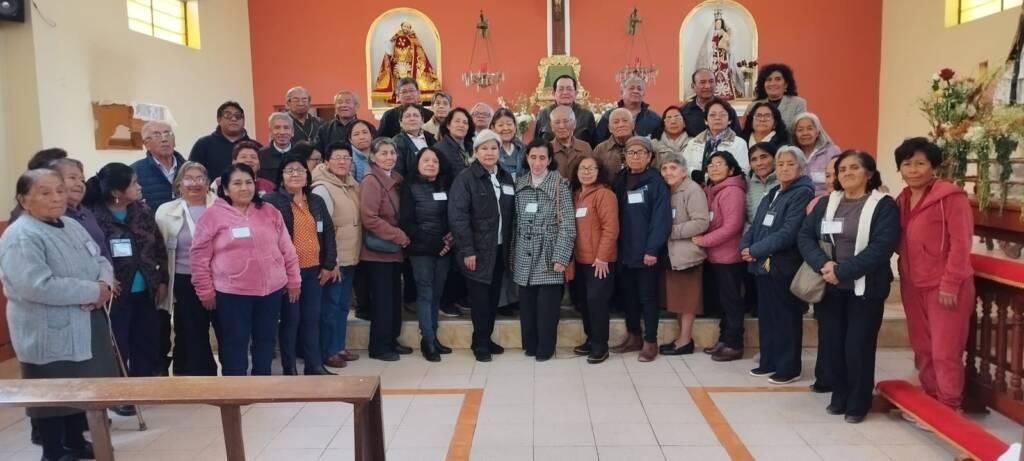
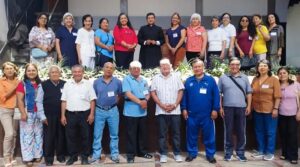
More than six decades have passed since those first steps. The Movement remains present in Peru, and Arequipa continues to preserve in a special way the memory of its beginnings. In 2018, the Church in Arequipa celebrated sixty years of the presence of Cursillos in Christianity and, five years later, gathered once again to celebrate its 65th anniversary. These celebrations were not simply about remembering a date. They were an acknowledgement of a history built by generations of priests and lay people, by leaders whose names we know and by many others whose names will probably never appear in any chronicle.
Because the true history of Cursillo in Peru cannot be written only through dates and names. It is made up of people who were once invited to experience a Cursillo; of friendships born around a table; of Group Reunions, Ultreyas and Schools of Leaders; of men and women who discovered that their families, workplaces, parishes and everyday environments were concrete places in which to live and proclaim the Gospel.
Today, that first seed continues to raise the same question. It is not enough to celebrate how far the Movement has come; we must also ask where we are called to go now. Peru has changed profoundly since 1958, and so have its environments, its cities, its families and its young people. Yet the need remains unchanged: men and women capable of approaching each person through friendship and proclaiming to them that God loves them.
Those first Cursillistas in Arequipa received something and did not keep it for themselves. They went out towards Lima and, from there, towards new places. Perhaps this is one of the most beautiful lessons of their story: each generation receives a torch that remains alight only when it dares to pass it on to the next.
The history of the Cursillo Movement in Peru, therefore, is not finished. That seed planted more than sixty years ago is still waiting for new ground, new environments and new protagonists.
And the next page is still waiting to be written.