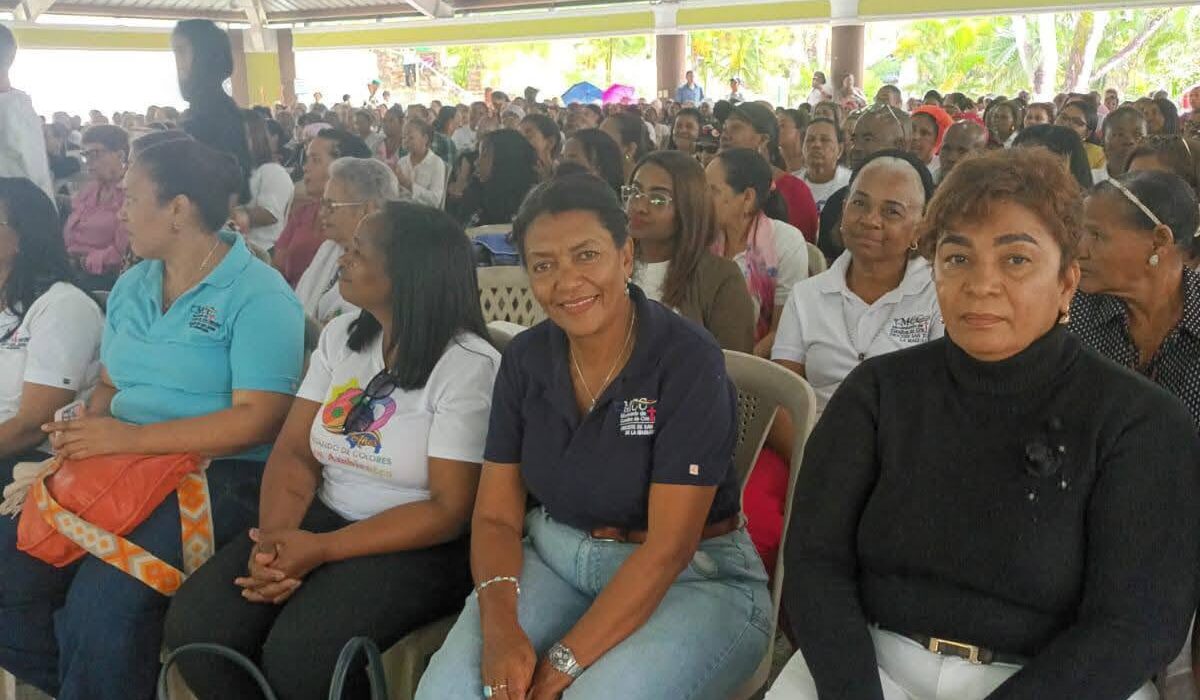
 To speak of the history of the Cursillos in Christianity Movement in the Dominican Republic is to speak of a true adventure of faith. It is to contemplate how the simple and joyful proclamation of the essentials of the Christian faith gradually found paths, faces, and hearts willing to live and share the experience of encountering Christ.
As has happened in so many Latin American countries, the Cursillos arrived in the Dominican Republic driven by men and women convinced that the Gospel could transform people’s lives and, through them, the communities where they lived. What began with small groups of leaders and a few Cursillos eventually became a vibrant ecclesial reality that reached numerous dioceses throughout the country.
The First Steps: Santo Domingo as the Starting Point
The first teams from Santo Domingo played a decisive role in the Movement’s initial expansion. From the capital, leaders and priests set out—moved by the desire to bring the Good News to every corner of the nation—and collaborated in holding the first Cursillos in various dioceses.
Those pioneers brought more than just a methodology. They brought enthusiasm, friendship, a spirit of service, and a deep trust in the workings of grace. Thanks to them, new Schools of Leaders and Secretariats began to emerge, which, over the years, would develop their own identity and strength.
La Vega: A Mother Diocese for Much of the Country
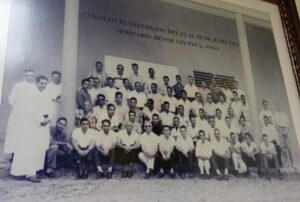 Among the Dominican dioceses, La Vega holds a special place in the history of the Movement. The first Cursillo de Cristiandad was held there from November 21 to 24, 1963. A small group of twelve men lived through that foundational experience under the guidance of leaders from Santo Domingo.
The beginnings were not easy. The first Cursillistas had to forge a path in an environment unaccustomed to seeing men publicly committed to the faith. However, the enthusiasm of those first apostles was extraordinary. They met constantly to share friendship, prayer, and apostolic commitment.
Very soon, new Cursillos began to be held. In February 1964, the first Cursillo for women took place, and from those early groups a dynamic and committed School of Leaders would emerge. The home of Hubert Álvarez Valencia and Ramonita became a true cenacle where apostolic initiatives were born, the Secretariat was consolidated, and the formation of leaders was strengthened.
Over the years, La Vega became a true missionary diocese within the Dominican MCC. From there, assistance was provided to other emerging dioceses, teams were shared, and the formation of new schools was supported. The historic Padre Fantino Cursillo House became a point of reference for numerous generations of Cursillistas.
San Francisco de Macorís: A Work Born of Fraternity
The history of San Francisco de Macorís clearly shows how the MCC grows when there is communion among dioceses.
Following the creation of the diocese in 1975, Bishop Nicolás de Jesús López Rodríguez called together a group of Cursillistas to launch the School for Leaders. For several years, they received constant support from their brothers in La Vega, who generously came to assist with the training and the organization of the first Cursillos.
The first five Cursillos were held in Nagua and were later moved to the Padre Fantino House in La Vega. That fraternal assistance made it possible to establish a solid structure that would later function independently.
A decisive boost came with the arrival of Bishop Jesús María de Jesús Moya, a great enthusiast of the Movement. Under his guidance, the MCC even took on the challenge of helping to build the Paul VI Formation Center, a sign of the trust that the local Church placed in the Cursillistas.
In 1984, the Diocesan Secretariat was officially established, and from that point on, the School of Leaders entered a new phase of maturity and growth.
San Juan de la Maguana: Persevering After Adversity
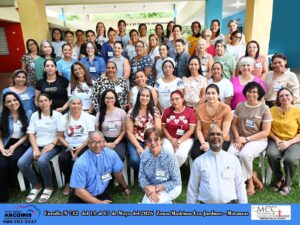 The history of San Juan de la Maguana is a beautiful testimony to perseverance.
The Movement began there on July 23, 1964, initially working in collaboration with the Diocese of Barahona. However, the lack of spiritual advisors led to an interruption lasting several years. Far from marking the end, that pause paved the way for a new beginning.
The arrival of Father José Domenech in 1979 made it possible to revive the Movement. Under his leadership, a new phase unfolded, culminating in the creation of the “Betsalem” Cursillo House, which was inaugurated with the first Cursillo held there in August 1983.
Experience shows that the seed of the Gospel can remain seemingly dormant for years, but when it finds fertile ground, it blossoms again with renewed vigor.
Higüey: A Flame Reignited
The Diocese of Our Lady of Altagracia has a history marked by two clearly distinct phases.
The first Cursillos began in 1963, and for several years the Movement grew rapidly. Local leaders emerged, and teams were formed capable of taking on the evangelizing responsibility for the diocese.
However, various difficulties led to the temporary suspension of activities in 1970. Years later, under the leadership of Bishop Hugo Eduardo Polanco Brito, the Movement was relaunched. The symbol chosen for that rebirth was a retreat called “El Tizón,” a name that perfectly expressed the desire to rekindle the fire that seemed to have gone out.
With the help of teams from Santo Domingo and Santiago, the School of Leaders was reorganized. Little by little, the Cursillistas from the diocese themselves fully took over the leadership of the Cursillos, reaching a level of maturity that allowed them to hold new experiences and strengthen the Poscursillo phase.
A Deeply Ecclesial Movement
One of the most notable characteristics of the MCC’s history in the Dominican Republic is its close communion with the Church. Various historical accounts demonstrate the close involvement of numerous bishops, priests, and pastoral workers who accompanied the Movement’s growth and recognized its evangelizing value.
This ecclesial communion enabled the Movement to participate actively in the pastoral work of the dioceses, collaborating in the formation of committed laypeople and promoting a transformative Christian presence in various sectors of society.
A History That Continues
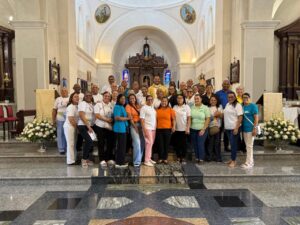 The history of the Cursillos in Christianity Movement in the Dominican Republic cannot be reduced to dates, names, or statistics. It is, above all, the story of thousands of people who discovered that God loves them, that Christ is alive, and that friendship can become a path to evangelization.
From those first Cursillos held in 1963 to the expansion that reached much of the country, the Dominican Cursillos Movement has witnessed countless conversions, vocations, apostolic commitments, and renewed Christian communities.
Today, as we reflect on this journey, the words that have accompanied generations of Cursillistas resonate powerfully: Christ is counting on you. And the history of the Cursillos in the Dominican Republic demonstrates that, when men and women respond generously to that call, the Gospel continues to fill the lives of individuals and communities with color.