To speak of the Latin American Cursillos in Christianity Group is to enter into a history of intuitions, providential encounters, and decisions that marked the course of a continent. Nothing in its origin was improvised. Everything arose because the Movement, as it grew, needed to listen to itself, coordinate, and walk together. As with the Church, life created the structure, not the other way around.
By the 1960s, Cursillos had already crossed the ocean. Born within Catholic Action, they took root in Mallorca, spread throughout Spain, and soon traveled throughout America “with a citizen’s letter,” as Paul VI said in Rome. That growth, fruitful but uneven, made one thing clear: the National Secretariats needed a bridge to unite them and allow them to discern together.
The seed of that bridge became clear when preparations began for the First Latin American Cursillo Meeting, held in Bogotá in August 1968. It was the first time that Cursillistas from America had gathered to talk not only about what was happening in their countries, but also about the place of the MCC in the mission of the Church on the continent. There, a shared conviction was born: America could not move forward in a scattered manner. The Movement needed a continental structure to help sustain unity, facilitate communication, and accompany growth.
That intuition crystallized thanks to two key figures: Fr. Cesáreo Gil, with his theological-pastoral vision, and Fr. José María Pujadas, with his organizational clarity. Both understood that the expansion of the Movement required a space for coordination that was simple, useful, and faithful to the charism. The result of this vision was the Latin American Office of Cursillos in Christianity (OLCC). It was the first international structure of the MCC, even though some countries on the continent did not even have a National Secretariat.
It was not an easy birth. There were tensions, reservations, and differences of opinion. But life itself resolved what the structure was just beginning to shape.
The OLCC quickly established itself as a service organization, capable of providing information, facilitating contact between countries, and helping to discern the Movement’s identity within the diverse realities of Latin America. The FE newsletter became its most valuable tool. Through it, reflections, experiences, and guidelines were circulated that helped Latin America experience the Cursillos with a continental sense.
Little by little, the Office ceased to be merely informative. It became a space for reflection, formation, and pastoral maturation. America began to think about the MCC with its own voice.
Over the years, that shared identity took shape. The OLCC helped to provide doctrinal unity, to shed light on pastoral challenges, and to organize the great continental encounters that would mark the life of the Movement. It did not impose anything. It had no authority over the Secretariats. But its capacity to serve and encourage generated a very Latin American style: fraternal, dialoguing, joyful, and deeply missionary.
In 2000, during the 10th Inter-American Encounter in Guatemala City, the Office took a natural step in its process of maturation. It adopted the name Latin American Group of Cursillos in Christianity (GLCC). The change was not cosmetic. It expressed an evolution: from an office that provided basic communication services to a Group that assumed responsibility for animating, coordinating, and safeguarding the unity of the MCC throughout the continent.
Since then, the GLCC has become a global reference point. It has been an inspiration and co-founder of the OMCC, has contributed to key doctrinal processes—such as the revision of Fundamental Ideas—and has been able to dialogue with the Holy See to ensure that the Movement remains faithful to its identity. Its participation in the clarification and defense of the OMCC Statutes before the Pontifical Council for the Laity is a historic chapter that shows the seriousness with which America has lived its service.
Over time, the GLCC has learned to read the new questions that history poses to Cursillistas. It has accompanied the Secretariats in times of crisis, sustained communion in periods of internal tension, offered formation in times of uncertainty, and promoted processes of unity at times when the Movement needed clarity and serenity.
Its role during the 2020 pandemic once again demonstrated its ability to adapt. When activities were suspended, the GLCC opened virtual pathways that kept communication, formation, and communion between countries alive. It did not let the flame go out.
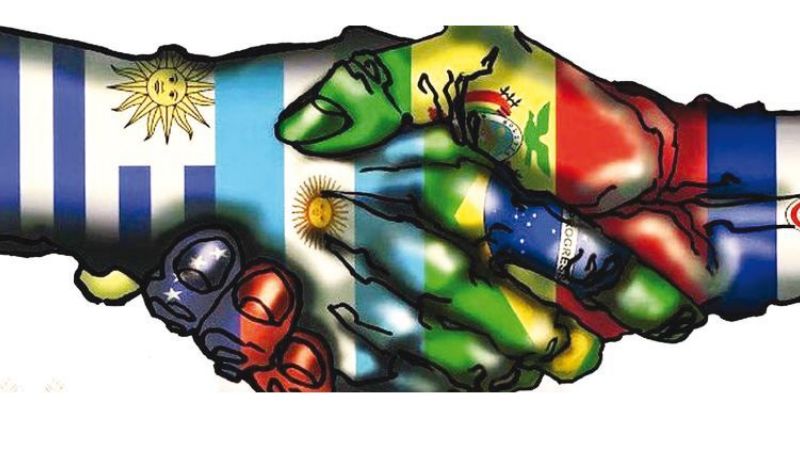
Today, the GLCC brings together nearly twenty countries, united not by uniformity but by a common charism that calls for friendship, joy, and mission. Its history is not a collection of dates. It is the story of how a continent learned to walk together, to listen to one another, to discern, and to remain faithful to the original spirit of the MCC.
The history of the GLCC is, in short, the history of service. And that service has allowed Cursillos in Latin America not only to grow, but also to think, discern, renew, unify criteria, and contribute to the whole world a very unique way of living and proclaiming the fundamentals of Christianity.
A historian might summarize it this way: the GLCC was born because America needed a common heart. And that heart continues to beat.